


 | Portal maintenance status: (November 2018)
|
The Ancient Greece Portal
.jpg&mode=clean)
Ancient Greece (Ancient Greek: Ἑλλάς, romanized: Hellás) was a northeastern Mediterranean civilization, existing from the Greek Dark Ages of the 12th–9th centuries BC to the end of classical antiquity (c. 600 AD), comprising a loose collection of culturally and linguistically related city-states and communities. Prior to the Roman period, most of these regions were officially unified only once under the Kingdom of Macedon from 338 to 323 BC. In Western history, the era of classical antiquity was immediately followed by the Early Middle Ages and the Byzantine period.
Three centuries after the decline of Mycenaean Greece during the Bronze Age collapse, Greek urban poleis began to form in the 8th century BC, ushering in the Archaic period and the colonization of the Mediterranean Basin. This was followed by the age of Classical Greece, from the Greco-Persian Wars to the death of Alexander the Great in 323 BC, which included the Golden Age of Athens, the Peloponnesian War between Athens and Sparta, the unification of Greece by Macedon under Philip II, the subsequent conquest of the Achaemenid Empire by Alexander the Great and the spread of Hellenistic civilization across the Middle East. The Hellenistic period is considered to have ended in 30 BC, when the last Hellenistic kingdom, Ptolemaic Egypt, was annexed by the Roman Republic.
Classical Greek culture, especially Greek philosophy, had a powerful influence on ancient Rome, which carried a version of it throughout the Mediterranean and much of Europe. For this reason, Classical Greece is generally considered the cradle of Western civilization, the seminal culture from which the modern West derives many of its founding archetypes and ideas in politics, philosophy, science, and art. (Full article...)
Selected article -

The modern Olympic Games (Olympics; French: Jeux olympiques) are among the biggest sporting events on Earth. They feature summer and winter sports events in which thousands of athletes from 206 countries and territories around the world participate in a variety of athletic competitions. The Olympic Games, open to both amateur and professional athletes, involve more than 200 teams, each team representing a sovereign state or territory. The Games often, but not always, substitute for any world championships during the year in which they take place. The Olympics are staged every four years. Since 1994, they have alternated between the Summer and Winter Olympics every two years during the four-year Olympiad.
Their creation was inspired by the ancient Olympic Games, held in Olympia, Greece, from the 8th century BC to the 4th century AD. Baron Pierre de Coubertin founded the International Olympic Committee (IOC) in 1894, leading to the first modern Games in Athens in 1896. The IOC is the governing body of the Olympic Movement, which encompasses all entities and individuals involved in the Olympic Games. The Olympic Charter defines their structure and authority. (Full article...)
Selected location -
.jpg&mode=clean)
Athens is the capital and largest city of Greece. A significant coastal urban area in the Mediterranean, Athens is also the capital of the Attica region and is the southernmost capital on the European mainland. With its urban area's population numbering over 3.6 million, it is the eighth-largest urban area in the European Union (EU). The Municipality of Athens (also City of Athens), which constitutes a small administrative unit of the entire urban area, had a population of 643,452 in 2021, within its official limits, and a land area of 38.96 square kilometres (15.04 square miles).
Athens is one of the world's oldest cities, with its recorded history spanning over 3,400 years, and its earliest human presence beginning somewhere between the 11th and 7th millennia BC. According to Greek mythology, the city was named after Athena, the ancient Greek goddess of wisdom, but modern scholars generally agree that the goddess took her name after the city. Classical Athens was one of the most powerful city-states in ancient Greece. It was a centre for Ancient Greek democracy, the arts, education and philosophy, and was highly influential throughout the Hellenistic world and the European continent, particularly in ancient Rome. For this reason it is often regarded as the cradle of Western civilisation and the birthplace of democracy in its own right independently from the rest of Greece. (Full article...)
Did you know...
- ... that after the battle of Plataea, the Greeks swore never to rebuild their sanctuaries, destroyed by the Persians during their invasion of Greece, but to leave them in ruins, as a perpetual reminder of barbarian ferocity?
- ...that Thebes, Greece played an important role in the fabric of Greek myth, being the site of the stories of Cadmus, Oedipus, Dionysus, and others?
- ...that the art of ancient Greece has exercised an enormous influence on the culture of many countries from ancient times until the present, particularly in the areas of sculpture and architecture?
Related portals


Selected biography -
_by_Fran%25C3%25A7ois-Andr%25C3%25A9_Vincent.jpg&mode=clean)
Alcibiades (; Ancient Greek: Ἀλκιβιάδης; c. 450 – 404 BC) was an Athenian statesman and general. The last of the Alcmaeonidae, he played a major role in the second half of the Peloponnesian War as a strategic advisor, military commander, and politician, but subsequently fell from prominence.
During the course of the Peloponnesian War, Alcibiades changed his political allegiance several times. In his native Athens in the early 410s BC, he advocated an aggressive foreign policy and was a prominent proponent of the Sicilian Expedition. After his political enemies brought charges of sacrilege against him, he fled to Sparta, where he served as a strategic adviser, proposing or supervising several major campaigns against Athens. However, Alcibiades made powerful enemies in Sparta too, and defected to Persia. There he served as an adviser to the satrap Tissaphernes until Athenian political allies brought about his recall. He served as an Athenian general (strategos) for several years, but enemies eventually succeeded in exiling him a second time. He took refuge in Persian territory and was eventually assassinated, reportedly at the instigation of Sparta. (Full article...)
-
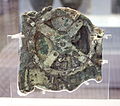 Image 1The Antikythera mechanism was an analog computer from 150 to 100 BC designed to calculate the positions of astronomical objects. (from Ancient Greece)
 -

-

-
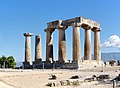 Image 4The remains of the Temple of Apollo in Corinth, the first Greek temple to be built in stone. (from Archaic Greece)
 -

-
 Image 6The lawgiver Solon reformed the Athenian constitution, which led to significant developments in Greece (from Archaic Greece)
 -
 Image 7Early Athenian coin, depicting the head of Athena on the obverse and her owl on the reverse – 5th century BC (from Ancient Greece)
 -

-
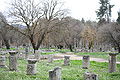 Image 9The gymnasium and palaestra at Olympia, the site of the ancient Olympic games. The archaic period conventionally dates from the first Olympiad. (from Archaic Greece)
 -
 Image 10A scene from the Iliad: Hypnos and Thanatos carrying the body of Sarpedon from the battlefield of Troy; detail from an Attic white-ground lekythos, c. 440 BC (from Ancient Greece)
 -
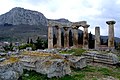 Image 11Ruins of the Temple of Apollo within the polis of Ancient Corinth, built c. 540 BC, with the Acrocorinth (the city's acropolis) seen in the background (from Archaic Greece)
 -
 Image 12Greek hoplite and Persian warrior depicted fighting, on an ancient kylix, 5th century BC (from Ancient Greece)
 -
 Image 13Marble bust of Pericles with a Corinthian helmet, Roman copy of a Greek original, Museo Chiaramonti, Vatican Museums; Pericles was a key populist political figure in the development of the radical Athenian democracy. (from Ancient Greece)
 -
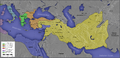 Image 14The major Hellenistic realms included the Diadochi kingdoms:Kingdom of Ptolemy I SoterKingdom of CassanderKingdom of LysimachusKingdom of Seleucus I NicatorAlso shown on the map:Carthage (non-Greek)Rome (non-Greek)
The orange areas were often in dispute after 281 BC. The Attalid dynasty occupied some of this area. Not shown: Indo-Greek Kingdom. (from Ancient Greece) -

-
-
 Image 17The Temple of Concordia, Valle dei Templi, Magna Graecia, in present-day Italy (from Archaic Greece)
 -

-
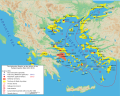
 Image 19Major regions of mainland ancient Greece and adjacent "barbarian" lands (from Ancient Greece)
 -

-
 Image 21Finds from an early Geometric cremation burial of a pregnant wealthy woman, from the N.W. of the Areopagus, about 850 BC, Ancient Agora Museum (Athens); exhibit 14–16: broad gold finger rings; exhibit 17–19: gold finger rings; 20: pair of gold earrings with trapezoid endings (from Greek Dark Ages)
 -

-
Image 23The Temple of Concordia, Valle dei Templi, Magna Graecia, present-day Italy (from Ancient Greece)
-

-
 Image 25The carved busts of four ancient Greek philosophers, on display in the British Museum. From left to right: Socrates, Antisthenes, Chrysippus, and Epicurus. (from Ancient Greece)
 -
 Image 26The Victorious Youth (c. 310 BC) is a rare, water-preserved bronze sculpture from ancient Greece. (from Ancient Greece)
 -

-
 Image 28An Ancient Greek pair of terracotta boots. Early geometric period cremation burial of a woman, 900 BC. Ancient Agora Museum in Athens. (from Greek Dark Ages)
 -
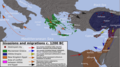 Image 29Map of the Late Bronze Age collapse (c. 1200 BC) in the Eastern Mediterranean (from Greek Dark Ages)
 -
 Image 30Dipylon Vase of the late Geometric period, or the beginning of the Archaic period, c. 750 BC. (from Ancient Greece)
 -
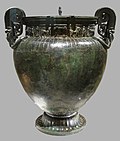 Image 31The Vix Krater, an imported Greek wine-mixing bronze vessel found in the Hallstatt/La Tène grave of the "Lady of Vix", Burgundy, France, c. 500 BC (from Archaic Greece)
 -
 Image 32Geometric-style box in the shape of a barn. On display in the Ancient Agora Museum in Athens, housed in the Stoa of Attalus. From early geometric cremation burial of a wealthy pregnant woman, 850 BC. (from Greek Dark Ages)
 -
 Image 33The Parthenon, a temple dedicated to Athena, located on the Acropolis in Athens, is one of the most representative symbols of the culture and sophistication of the ancient Greeks. (from Ancient Greece)
 -
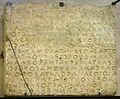 Image 34Inheritance law, part of the Gortyn code, Crete, fragment of the 11th column. Limestone, 5th century BC (from Ancient Greece)

.jpg&mode=clean)


.JPG&mode=clean)


.jpg&mode=clean)


Selected picture

A caryatid (Greek: Καρυάτις, plural: Καρυάτιδες) is a sculpted female figure serving as an architectural support taking the place of a column or a pillar supporting an entablature on her head. The Greek term karyatides literally means "maidens of Karyae", an ancient town of Peloponnese.
Topics
Life: Agriculture · Art · Cuisine · Democracy · Economy · Language · Law · Medicine · Paideia · Pederasty · Pottery · Prostitution · Slavery · Technology · Olympic Games
Philosophers: Pythagoras · Heraclitus · Parmenides · Protagoras · Empedocles · Democritus · Socrates · Plato · Aristotle · Zeno · Epicurus
Authors: Homer · Hesiod · Pindar · Sappho · Aeschylus · Sophocles · Euripides · Aristophanes · Menander · Herodotus · Thucydides · Xenophon · Plutarch · Lucian · Polybius · Aesop
Buildings: Parthenon · Temple of Artemis · Acropolis · Ancient Agora · Arch of Hadrian · Temple of Zeus at Olympia · Colossus of Rhodes · Temple of Hephaestus · Samothrace temple complex
Chronology: Aegean civilization · Minoan Civilization · Mycenaean civilization · Greek dark ages · Classical Greece · Hellenistic Greece · Roman Greece
People of Note: Alexander The Great · Lycurgus · Pericles · Alcibiades · Demosthenes · Themistocles · Archimedes · Hippocrates
Art and Sculpture: Kouroi · Korai · Kritios Boy · Doryphoros · Statue of Zeus · Discobolos · Aphrodite of Knidos · Laocoön · Phidias · Euphronios · Polykleitos · Myron · Parthenon Frieze · Praxiteles


Subcategories

Things to do
 |
Here are some tasks awaiting attention:
|
Associated Wikimedia
The following Wikimedia Foundation sister projects provide more on this subject:
-
 Commons
Free media repository -
 Wikidata
Free knowledge base -
 Wikiquote
Collection of quotations -
 Wikisource
Free-content library -
 Wikiversity
Free learning tools -
 Wiktionary
Dictionary and thesaurus


