


 | Portal maintenance status: (September 2021)
|
The Cities Portal


A city is a human settlement of a substantial size. The term "city" has different meanings around the world and in some places the settlement can be very small. Even where the term is limited to larger settlements, there is no universally agreed definition of the lower numerical boundary for their size. In a more specific sense, a city can be defined as a permanent and densely populated place with administratively defined boundaries whose members work primarily on non-agricultural tasks. Cities generally have extensive systems for housing, transportation, sanitation, utilities, land use, production of goods, and communication. Their density facilitates interaction between people, government organizations, and businesses, sometimes benefiting different parties in the process, such as improving the efficiency of goods and service distribution.
Historically, city dwellers have been a small proportion of humanity overall, but following two centuries of unprecedented and rapid urbanization, more than half of the world population now lives in cities, which has had profound consequences for global sustainability. Present-day cities usually form the core of larger metropolitan areas and urban areas—creating numerous commuters traveling toward city centres for employment, entertainment, and education. However, in a world of intensifying globalization, all cities are to varying degrees also connected globally beyond these regions. This increased influence means that cities also have significant influences on global issues, such as sustainable development, climate change, and global health. Because of these major influences on global issues, the international community has prioritized investment in sustainable cities through Sustainable Development Goal 11. Due to the efficiency of transportation and the smaller land consumption, dense cities hold the potential to have a smaller ecological footprint per inhabitant than more sparsely populated areas. Therefore, compact cities are often referred to as a crucial element in fighting climate change. However, this concentration can also have some significant harmful effects, such as forming urban heat islands, concentrating pollution, and stressing water supplies and other resources. (Full article...)
Selected city -

The Free City of Danzig (German: Freie Stadt Danzig; Polish: Wolne Miasto Gdańsk) was a city-state under the protection and oversight of the League of Nations between 1920 and 1939, consisting of the Baltic Sea port of Danzig (now Gdańsk, Poland) and nearly 200 other small localities in the surrounding areas. The country was established on 15 November 1920, per the terms of Article 100 (Section XI of Part III) of the 1919 Treaty of Versailles, following the end of World War I.
Although predominantly German-populated, the territory was bound by the imposed union with Poland, which covered foreign policy, defense, customs, railways, and post, and remained distinct from both the post-war Weimar Republic and the newly independent Polish Republic. Additionally, Poland was granted certain rights related to port facilities in the city. (Full article...)
Did you know -
- ... that the Chapel of St. Cornelius the Centurion in New York City was designed by Charles C. Haight, whose father had previously served in the clergy of the chapel's parish?
- ... that the Salem Methodist Church in Harlem operated a boxing club in its basement?
- ... that one incident in Vatican City caused it to have the highest murder rate in the world in 1998?
- ... that in 2006, half a million people used a temporary New York City public toilet sponsored by a toilet paper brand?
- ... that Frederick Prigg and his predecessor as secretary of the Provisional Government of Oregon were both doctors who drowned in a river at Oregon City just three years apart?
- ... that Rochdale v York City in April 2026 was the first time that a single English football league match was a title-decider since Liverpool faced Arsenal in May 1989?
Related portals


Related WikiProjects

 Recognized content -


Enugu [Pronunciation] (Igbo: Alaọha Enugwu (verbally pronounced as "Enugwu" by the Igbo indigenes) is a state in the South-East geopolitical zone of Nigeria, bordered to the north by the states of Benue and Kogi, Ebonyi to the east and southeast, Abia to the south, and Anambra to the west. The state takes its name from its capital and largest city, Enugu. The city acquired township status in 1917 and was called Enugwu-Ngwo. Due to the rapid expansion towards areas owned by other indigenous communities, it was renamed Enugu in 1928.
Of the 36 states, Enugu is the 29th largest in area and 22nd most populous with an estimated population of over 4.4 million as of 2016. Geographically, the state is divided between the Niger Delta swamp forests in the far south and the drier Guinean forest–savanna mosaic with some savanna in the rest of the state. Other important geographical features are the Udi-Nsukka Plateau and Ekulu River, which flows through the city of Enugu. (Full article...)
Selected article -
_Panorama.jpg&mode=clean)
A ghetto is a part of a city in which members of a minority group are concentrated, especially as a result of political, social, legal, religious, environmental or economic pressure. Ghettos are often known for being more impoverished than other areas of the city. Versions of such restricted areas have been found across the world, each with their own names, classifications, and groupings of people.
The term was originally used for the Venetian Ghetto in Venice, Italy, as early as 1516, to describe the part of the city where Jewish people were restricted to live and thus segregated from other people. However, other early societies may have formed their own versions of the same structure; words resembling ghetto in meaning appear in Hebrew, Yiddish, Italian, Germanic, Polish, Corsican, Old French, and Latin. During the Holocaust, more than 1,000 Nazi ghettos were established to hold the Jewish populations of Europe, with the goal of exploiting and killing European Jews as part of the Final Solution of Nazi Germany. (Full article...)
-
 Image 1View of the Agora of Athens with the temple of Hephaestus to the left and the Stoa of Attalos to the right (from History of cities)
 -
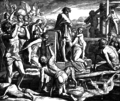 Image 2Cain founding the city of Enoch (from History of cities)
 -
 Image 3A poster from the EPA entitled "Soak Up the Rain with Green Infrastructure." The poster depicts various green infrastructure that can be effective in preventing floods. (from Urban geography)
 -
 Image 4Palmanova, Italy, constructed in 1593 according to the defensive ideal of the star fort, today retains its distinctive geometry. (from History of cities)
 -

-
-
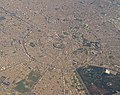 Image 7The city of Arbil in the Kurdistan Region of Iraq has a radial urban structure centred on an ancient fortress (from Urban structure)
 -
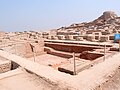 Image 8Mohenjo-daro, a World Heritage Site that was part of the Indus Valley Civilization (from History of cities)
 -
 Image 9New York City, one of the largest urban areas in the world (from Urban geography)
 -
 Image 10A map showing the world energy consumption per capita based on 2013 data from the World Bank. (from Urban geography)
 -
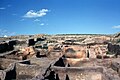 Image 11Excavated foundations of Çatalhöyük, Turkey. An Anatolian town dated to 7000 BCE. (from History of cities)
 -
 Image 12Extent and major sites of the Indus Valley Civilization of ancient India (from History of cities)
 -
-
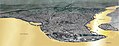 Image 14Constantinople, the largest and wealthiest city in Europe from the 9th through the 12th century (from History of cities)
 -
 Image 15Daily life of people from the Song period at the capital, Bianjing, today's Kaifeng (from History of cities)
 -

-
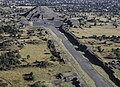 Image 17The Avenue of the Dead in Teotihuacan originates with the Pyramid of the Moon, forming the basis of the city grid. (from History of cities)
 -
 Image 18Aerial photograph shows the remains of the Sumerian city Ur, near Nasiriyah, Iraq. (from History of cities)
 -
 Image 19This woodcut shows Nuremberg as a prototype of a flourishing and independent city in the 15th century. (from History of cities)


_from_the_east_corner_of_the_86th_Floor_Observatory_of_the_Empire_State_Building_in_Manhattan%2C_New_York_City%2C_New_York.jpg&mode=clean)


.jpg&mode=clean)
_LACMA_M.2008.40.98.8.jpg&mode=clean)


Topics


List articles
Subcategories

Associated Wikimedia
The following Wikimedia Foundation sister projects provide more on this subject:
-
 Commons
Free media repository -
 Wikidata
Free knowledge base -
 Wikiquote
Collection of quotations -
 Wikisource
Free-content library -
 Wikiversity
Free learning tools -
 Wiktionary
Dictionary and thesaurus


