


 | Portal maintenance status: (June 2018)
|
The Classical Music Portal


Classical music is a tradition of art music in the Western world, considered to be distinct from Western folk music or popular music. It is sometimes distinguished as Western classical music, as the term "classical music" can also be applied to non-Western art musics. Classical music is often characterized by formality and complexity in its musical form and harmonic organization, particularly with the use of polyphony. Since at least the ninth century, it has been primarily a written tradition, spawning a sophisticated notational system, as well as accompanying literature in analytical, critical, historiographical, musicological and philosophical practices. (Full article...)
-
 Image 1
Second page of O dolcezz'amarissime d'amore, written for the concerto by Luzzasco Luzzaschi. The excerpt displays the fast-moving virtuosic passages in which the group specialized.
The concerto delle donne (lit. 'consort of ladies') was an ensemble of professional female singers of late Renaissance music in Italy. The term usually refers to the first and most influential group in Ferrara, which existed between 1580 and 1597. Renowned for their technical and artistic virtuosity, the Ferrarese group's core members were the sopranos Laura Peverara, Livia d'Arco and Anna Guarini.
The Duke of Ferrara, Alfonso II d'Este, founded a group of mostly female singers for his chamber music series, musica secreta (lit. 'secret music'). These singers were exclusively noble women, such as Lucrezia and Isabella Bendidio. In 1580, Alfonso formally established the concerto delle donne for both his wife Margherita Gonzaga d'Este and reasons of prestige. The new group included professional singers of upper-class, but not noble, backgrounds, under the direction of the composers Luzzasco Luzzaschi and Ippolito Fiorini. Their signature style of florid, highly ornamented singing brought prestige to Ferrara and inspired composers of the time such as Lodovico Agostini, Carlo Gesualdo, and Claudio Monteverdi. (Full article...) -
Image 2
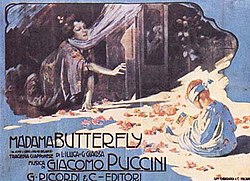 Original 1904 poster by Adolfo Hohenstein
Madama Butterfly (Italian pronunciation: [maˈdaːma ˈbatterflai]; Madame Butterfly) is an opera in three acts (originally two) by Giacomo Puccini, with an Italian libretto by Luigi Illica and Giuseppe Giacosa. The Schickling catalog number is SC 74.
It is based on the short story "Madame Butterfly" (1898) by John Luther Long, which, in turn, was based on stories told to Long by his sister Jennie Correll, and on the semi-autobiographical 1887 French novel Madame Chrysanthème by Pierre Loti. Long's version was dramatized by David Belasco as the one-act play Madame Butterfly: A Tragedy of Japan, which, after premiering in New York in 1900, moved to London, where Puccini saw it in the summer of that year. (Full article...) -
Image 3
 Cover of the symphony, with the dedication to Prince J. F. M. Lobkowitz and Count Rasumovsky
The Symphony No. 5 in C minor, Op. 67 (occasionally known as the Fate Symphony, German: Schicksalssinfonie), is a symphony composed by Ludwig van Beethoven between 1804 and 1808. It is one of the best-known of all symphonies and one of the most frequently played. First performed in Vienna in 1808, the work achieved its strong critical reputation not long afterward; E. T. A. Hoffmann described it as "one of the most important works of the time".
The 5th Symphony has 4 movements. It begins with a distinctive 4-note "short-short-short-long" motif, often characterized as "fate knocking at the door", the Schicksals-Motiv (fate motif). Sometimes this motif is remembered as "da-da-da-dum" or "da da da DUM". (Full article...) -
Image 4

Hector Berlioz was the first to use the term "choral symphony" for a musical composition—his Roméo et Juliette.
A choral symphony is a musical composition for orchestra, choir, and sometimes solo vocalists that, in its internal workings and overall musical architecture, adheres broadly to symphonic musical form. The term "choral symphony" in this context was coined by Hector Berlioz when he described his Roméo et Juliette as such in his five-paragraph introduction to that work. The direct antecedent for the choral symphony is Ludwig van Beethoven's Ninth Symphony. Beethoven's Ninth incorporates part of the ode An die Freude ("Ode to Joy"), a poem by Friedrich Schiller, with text sung by soloists and chorus in the last movement. It is the first example of a major composer's use of the human voice on the same level as instruments in a symphony.
A few 19th-century composers, notably Felix Mendelssohn and Franz Liszt, followed Beethoven in producing choral symphonic works. Notable works in the genre were produced in the 20th century by Gustav Mahler, Igor Stravinsky, Ralph Vaughan Williams, Benjamin Britten and Dmitri Shostakovich, among others. The final years of the 20th century and the opening of the 21st century have seen several new works in this genre, among them compositions by Mikis Theodorakis, Peter Maxwell Davies, Tan Dun, Philip Glass, Hans Werner Henze, Krzysztof Penderecki, William Bolcom and Robert Strassburg. (Full article...) -
Image 5
 Probable portrait of Vivaldi, c. 1723
Antonio Lucio Vivaldi (4 March 1678 – 28 July 1741) was an Italian composer, virtuoso violinist and impresario of Baroque music. Regarded as one of the greatest Baroque composers, Vivaldi's influence during his lifetime was widespread across Europe, giving origin to many imitators and admirers. He pioneered many developments in orchestration, violin technique and programmatic music. He consolidated the emerging concerto form, especially the solo concerto, into a widely accepted and followed idiom.
Vivaldi composed many instrumental concertos, for the violin and a variety of other musical instruments, as well as sacred choral works and more than fifty operas. His best-known work is a series of violin concertos known as The Four Seasons. Many of his compositions were written for the all-female music ensemble of the Ospedale della Pietà, a home for abandoned children in his native Venice. Vivaldi began studying for the Catholic priesthood at the age of 15 and was ordained at 25, but was given dispensation to no longer say public Masses because of a health problem. Vivaldi also had some success with expensive stagings of his operas in Venice, Mantua, and Vienna. After meeting the Emperor Charles VI, he moved to Vienna, hoping for royal support, but the Emperor died soon after his arrival, and Vivaldi died in poverty less than a year later. (Full article...) -
Image 6The Nutcracker (Russian: Щелкунчик, romanized: Shchelkunchik, pronounced [ɕːɪlˈkunʲtɕɪk] ⓘ), Op. 71, is an 1892 two-act classical ballet (conceived as a ballet-féerie; Russian: балет-феерия, romanized: balet-feyeriya) by Pyotr Ilyich Tchaikovsky, set on Christmas Eve at the foot of a Christmas tree in a child's imagination featuring a Nutcracker doll. The plot is an adaptation of Alexandre Dumas's 1844 short story The Tale of a Nutcracker, itself a retelling of E. T. A. Hoffmann's 1816 short story The Nutcracker and the Mouse King. The ballet's first choreographer was Marius Petipa, with whom Tchaikovsky had worked three years earlier on The Sleeping Beauty, assisted by Lev Ivanov. Although the complete and staged The Nutcracker ballet was not initially as successful as the 20-minute Nutcracker Suite that Tchaikovsky had premiered nine months earlier, it became popular in later years.
Since the late 1960s, The Nutcracker has been danced by many ballet companies, especially in North America. Major American ballet companies generate around 40% of their annual ticket revenues from performances of the ballet. Its score has been used in several film adaptations of Hoffmann's story. (Full article...) -
Image 7
 Rossini painted by Hortense Haudebourt-Lescot in 1828, the year he began composing William Tell
The William Tell Overture is the overture to the opera William Tell (original French title Guillaume Tell), composed by Gioachino Rossini. William Tell premiered in 1829 and was the last of Rossini's 39 operas, after which he went into semi-retirement. (He continued to compose cantatas, sacred music and secular vocal music.) The overture is in four parts, each following without pause.
There has been repeated use (and sometimes parody) of parts of this overture in both classical music and popular media. The finale has been consistently used as the theme music for The Lone Ranger in radio, television and film, and has become widely associated with horseback riding since then. Two different parts were also used as theme music for the British television series The Adventures of William Tell, the fourth part (popularly identified in the US with The Lone Ranger) in the UK, and the third part, rearranged as a stirring march, in the US. (Full article...) -
Image 8
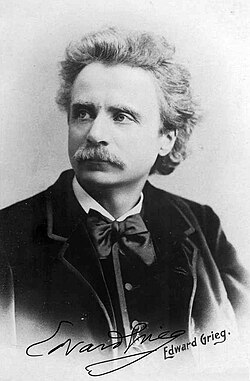 Photograph of Grieg, 1888
Peer Gynt, Op. 23, is the incidental music to Henrik Ibsen's 1867 play Peer Gynt, written by the Norwegian composer Edvard Grieg in 1875. It premiered along with the play on 24 February 1876 in Christiania (now Oslo). Grieg later created two suites from his Peer Gynt music. Some of the music from these suites has received coverage in popular culture. (Full article...) -
Image 9

Cincinnati Symphony Orchestra
An orchestra ( ⓘ; OR-ki-strə) is a large instrumental ensemble typical of classical music or jazz, which combines instruments from different families. There are typically four main sections of instruments:- The string section, including the violin, viola, cello, and double bass
- The woodwind section, including the flute, oboe, clarinet, and bassoon, and sometimes piccolo, cor anglais, bass clarinet, contrabassoon, and saxophone
- The brass section, including the French horn (commonly known as the "horn"), trumpet, trombone, and tuba, and sometimes cornet and euphonium
- The percussion section, including the timpani, snare drum, bass drum, cymbals, triangle, tambourine, tam-tam and mallet percussion instruments
-
Image 10
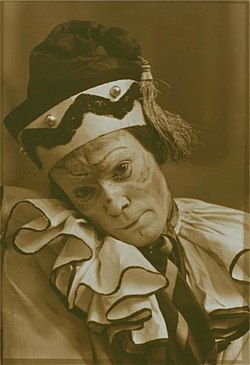 Nijinsky as Petrushka
Petrushka (French: Petrouchka; Russian: Петрушка) is a ballet by Russian composer Igor Stravinsky. It was written for the 1911 Paris season of Sergei Diaghilev's Ballets Russes company; the original choreography was by Michel Fokine and stage designs and costumes by Alexandre Benois, who assisted Stravinsky with the libretto. The ballet premiered at the Théâtre du Châtelet on 13 June 1911 with Vaslav Nijinsky as Petrushka, Tamara Karsavina as the lead ballerina, Alexander Orlov as the Moor, and Enrico Cecchetti as the charlatan.
Petrushka tells the story of the loves and jealousies of three puppets. They are brought to life by the Charlatan during the 1830 Shrovetide Fair (Maslenitsa) in Saint Petersburg. Petrushka is in love with the Ballerina, but she rejects him as she prefers the Moor. Petrushka is angry and hurt, and curses the Charlatan for bringing him into the world with only pain and suffering in his miserable life. Because of his anger, he challenges the Moor. The Moor, who is bigger and stronger than Petrushka, kills him with his scimitar. The crowd watching is horrified, and the Charlatan is called to the scene as well as a police officer. The Charlatan reminds everyone that Petrushka is nothing but a puppet made of straw and cloth, and that he has no real emotion nor 'life'. As the crowd disperses, the Charlatan is left alone onstage. At that moment, Petrushka's ghost rises above the puppet theatre as night falls. He shakes his fist and thumbs his nose at the Charlatan, making him flee, terrified. Petrushka then collapses in a second death. (Full article...) -
Image 11
 Portrait of Giovanni Pierluigi da Palestrina, by an unknown Italian painter (c. 1590)
Giovanni Pierluigi da Palestrina (between 3 February 1525 and 2 February 1526 – 2 February 1594) was an Italian composer of late Renaissance music. The central representative of the Roman School, with Orlande de Lassus and Tomás Luis de Victoria, Palestrina is considered the leading composer of late 16th-century Europe. Palestrina was one of the few Renaissance composers never entirely forgotten, but it was the so-called "Palestrinian style" of counterpoint—especially as codified by Johann Joseph Fux—rather than his individual compositions that exerted the greatest influence.
Born in the town of Palestrina in the Papal States, Palestrina moved to Rome as a child and underwent musical studies there. In 1551, Pope Julius III appointed him maestro di cappella of the Cappella Giulia at St. Peter's Basilica. He left the post four years later, unable to continue as a layman under the papacy of Paul IV, and held similar positions at St. John Lateran and Santa Maria Maggiore in the following decade. Palestrina returned to the Cappella Giulia in 1571 and remained at St Peter's until his death in 1594. (Full article...) -
Image 12
 The arrival of the Queen of the Night. Stage set by Karl Friedrich Schinkel for an 1815 production.
The Magic Flute (German: Die Zauberflöte, pronounced [diː ˈtsaʊbɐˌfløːtə] ⓘ), K. 620, is an opera in two acts by Wolfgang Amadeus Mozart to a German libretto by Emanuel Schikaneder. It is a Singspiel, a popular form that included both singing and spoken dialogue. The work premiered on 30 September 1791 at Schikaneder's theatre, the Freihaus-Theater auf der Wieden in Vienna, just two months before Mozart's death. It was Mozart's last opera. It was an outstanding success from its first performances, and remains a staple of the opera repertory.
In the opera, the Queen of the Night persuades Prince Tamino to rescue her daughter Pamina from captivity under the high priest Sarastro; instead, he learns the high ideals of Sarastro's community and seeks to join it. Separately, then together, Tamino and Pamina undergo severe trials of initiation, which end in triumph, with the Queen and her cohorts vanquished. The earthy Papageno, who accompanies Tamino on his quest, fails the trials completely but is rewarded anyway with the hand of his ideal female companion Papagena. (Full article...)


_by_Elliot_and_Fry_-_02.jpg&mode=clean)


-

-
-

-
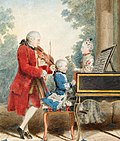 Image 4Wolfgang Amadeus Mozart, a representative composer of the Classical period, seated at a keyboard (from Classical period (music))
 -
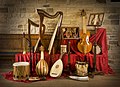 Image 5Selection of Renaissance instruments (from Renaissance music)
 -
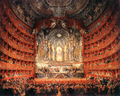 Image 6A large instrumental ensemble's performance in the lavish Teatro Argentina, as depicted by Panini (1747) (from Baroque music)
 -
 Image 7Bernhard Crusell, a Swedish-Finnish composer and clarinetist, in 1826 (from Classical period (music))
 -

-
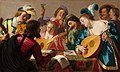 Image 9Gerard van Honthorst, The Concert (1623), National Gallery of Art, Washington D.C. (from Renaissance music)
 -
 Image 10Fortepiano by Paul McNulty after Walter & Sohn, c. 1805 (from Classical period (music))
 -

-
 Image 12Gustav Mahler, photographed in 1907 by Moritz Nähr at the end of his period as director of the Vienna Hofoper (from Romantic music)
 -

-
 Image 14Gluck, detail of Portrait of Christoph Willibald Gluck by Joseph Duplessis, dated 1775 (Kunsthistorisches Museum, Vienna) (from Classical period (music))
 -
 Image 15Wolfgang Amadeus Mozart, posthumous painting by Barbara Krafft in 1819 (from Classical period (music))
 -
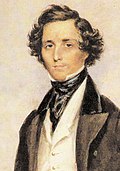
-
 Image 17Josef Danhauser's 1840 painting Liszt at the Piano featuring Franz Liszt at the piano surrounded by (from left to right) Alexandre Dumas, Hector Berlioz, George Sand, Niccolò Paganini, Gioachino Rossini and Marie d'Agoult, with a bust of Ludwig van Beethoven on the piano (from Romantic music)
 -
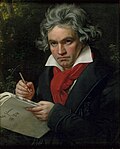
-

-
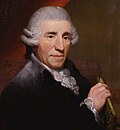
-
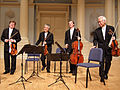 Image 21A modern string quartet. In the 2000s, string quartets from the Classical era are the core of the chamber music literature. From left to right: violin 1, violin 2, cello, viola. (from Classical period (music))
 -
 Image 22Musicians from 'Procession in honour of Our Lady of Sablon in Brussels.' Early 17th-century Flemish alta cappella. From left to right: bass dulcian, alto shawm, treble cornett, soprano shawm, alto shawm, tenor sackbut. (from Renaissance music)
 -
-
 Image 24Painting by Evaristo Baschenis of Baroque instruments, including a cittern, viola da gamba, violin, and two lutes (from Baroque music)
 -
 Image 251875 oil painting of Franz Schubert by Wilhelm August Rieder, after his own 1825 watercolor portrait (from Classical period (music))
 -
 Image 26Wanderer above the Sea of Fog, by Caspar David Friedrich, is an example of Romantic painting. (from Romantic music)
 -
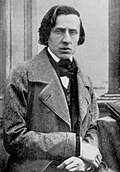
-
 Image 28An example of a guitar from the classical period (from Classical period (music))
 -
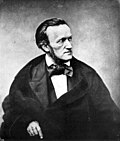 Image 29Richard Wagner in Paris, 1861
 -
 Image 30Hummel in 1814 (from Classical period (music))
 -
 Image 31Balakirev (top), Cui (upper left), Mussorgsky (upper right), Rimsky-Korsakov (lower left), and Borodin (lower right). (from Romantic music)
 -

-
 Image 33Portion of Du Fay's setting of Ave maris stella, in fauxbourdon. The top line is a paraphrase of the chant; the middle line, designated "fauxbourdon", (not written) follows the top line but exactly a perfect fourth below. The bottom line is often, but not always, a sixth below the top line; it is embellished, and reaches cadences on the octave.Play (from Renaissance music)
 -
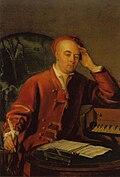
-
 Image 35The opening bars of the Commendatore's aria in Mozart's opera Don Giovanni. The orchestra starts with a dissonant diminished seventh chord (G# dim7 with a B in the bass) moving to a dominant seventh chord (A7 with a C# in the bass) before resolving to the tonic chord (D minor) at the singer's entrance. (from Classical period (music))


_Google_Art_Project.jpg&mode=clean)


.jpg&mode=clean)


Quotes –
| “ | Music is enough for a life — but a life is too short for music. | ” |
| — Richard Strauss | ||
Related portals


WikiProjects




-
Image 1
 Wall at a Video Games Live event in 2009
Jack Wall is an American video game music composer. He has worked on video game music for over 20 games including the Myst franchise, Splinter Cell, Jade Empire, Mass Effect, and Call of Duty. Wall earned a degree in civil engineering from Drexel University in Philadelphia, Pennsylvania, and, after a brief stint working in civil engineering, transitioned into music production. He worked with musicians such as John Cale, David Byrne, and Patti Smith, and, after performing increasingly complex production and sound engineering tasks, moved into music composition in 1995.
Wall's first video game composition was the soundtrack to Vigilance. Primarily composing in an orchestral style, by 2001 he composed the soundtrack to Myst III: Exile, which was the title he says put him on the map as a video game composer. In 2002, Wall became one of around 20 co-founders of the Game Audio Network Guild (G.A.N.G.) as well as senior director. In 2005, Wall, along with G.A.N.G. founder and fellow composer Tommy Tallarico, produced the Video Games Live concert series, having served as the conductor for the international concert tour. His soundtracks for Myst III: Exile, Myst IV: Revelation, Rise of the Kasai, Jade Empire, Mass Effect, and Mass Effect 2 were nominated for and won multiple awards. (Full article...) -
Image 2

Gustaf Allan Pettersson (19 September 1911 – 20 June 1980) was a Swedish composer and violist. He is considered one of the 20th century's most important Swedish composers and was described as one of the last great symphonists, often compared to Gustav Mahler. Pettersson's music has a very distinctive sound and can hardly be confused with that of any other 20th-century composer. In the final decade of his life, his symphonies (typically one-movement works) developed an international following, particularly in Germany and Sweden. Of these, his best known work is Symphony No. 7. His music later found success in the United States. The conductors Antal Doráti and Sergiu Comissiona premiered and recorded several of his symphonies. Pettersson's song cycle Barefoot Songs influenced many of his compositions. Doráti arranged eight of the Barefoot Songs. Birgit Cullberg produced three ballets based on Pettersson's music.
Pettersson studied at the conservatory of the Royal Swedish Academy of Music. For more than a decade, he was a violist in the Stockholm Concert Society; after retiring he devoted himself exclusively to composition. Later in his life, he suffered from rheumatoid arthritis. Pettersson was awarded the Swedish royal medal Litteris et Artibus. (Full article...) -
Image 3

Sir John Stainer
Sir John Stainer (6 June 1840 – 31 March 1901) was an English composer and organist whose music, though seldom performed today (with the exception of The Crucifixion, still heard at Passiontide in some Anglican churches), was very popular during his lifetime. His work as choir trainer and organist set standards for Anglican church music that are still influential. He was also active as an academic, becoming Heather Professor of Music at Oxford.
Stainer was born in Southwark, London, in 1840, the son of a schoolmaster. He became a chorister at St Paul's Cathedral when aged ten and was appointed to the position of organist at St Michael's College, Tenbury, at the age of sixteen. He later became organist at Magdalen College, Oxford, and subsequently organist at St Paul's Cathedral. When he retired owing to his poor eyesight and deteriorating health, he returned to Oxford to become Professor of Music at the university. He died unexpectedly while on holiday in Italy in 1901. (Full article...) -
Image 4
 Janáček in 1914
Leoš Janáček (Czech: [ˈlɛoʃ ˈjanaːtʃɛk] ⓘ; 3 July 1854 – 12 August 1928) was a Czech composer, music theorist, folklorist, publicist and teacher. He was inspired by Moravian and other Slavic music, including Eastern European folk music, to create an original, modern musical style.
Born in Hukvaldy, Janáček demonstrated musical talent at an early age and was educated in Brno, Prague, Leipzig, and Vienna. He then returned to live in Brno, where he married his pupil Zdenka Schulzová and devoted himself mainly to folkloristic research. His earlier musical output was influenced by contemporaries such as Antonín Dvořák, but around the turn of the century he began to incorporate his earlier studies of national folk music, as well as his transcriptions of "speech melodies" of spoken language, to create a modern, highly original synthesis. The death of his daughter Olga in 1903 had a profound effect on his musical output; these notable transformations were first evident in the opera Jenůfa (often called the "Moravian national opera"), which premiered in 1904 in Brno. (Full article...) -
Image 5
Frederick II (German: Friedrich II.; 24 January 1712 – 17 August 1786) was the monarch of Prussia from 1740 until his death in 1786. He was the last Hohenzollern monarch titled King in Prussia, declaring himself King of Prussia after annexing Royal Prussia from the Polish–Lithuanian Commonwealth in 1772. His most significant accomplishments include military successes in the Silesian wars, reorganisation of the Prussian Army, the First Partition of Poland, and patronage of the arts and the Enlightenment. Prussia greatly increased its territories and became a major military power in Europe under his rule. He became known as Frederick the Great (German: Friedrich der Große) and was nicknamed "Old Fritz" (German: der Alte Fritz).
In his youth, Prince Frederick was more interested in music and philosophy than war, which led to clashes with his authoritarian father, Frederick William I of Prussia. However, upon ascending to the throne, he attacked and annexed the rich Austrian province of Silesia in 1742, winning military acclaim. He became an influential military theorist, whose analyses emerged from his extensive personal battlefield experience and covered issues of strategy, tactics, mobility and logistics. (Full article...) -
Image 6
 Portrait by Franz Hanfstaengl, 1857
Clara Josephine Schumann (; German: [ˈklaːʁa ˈʃuːman]; née Wieck; 13 September 1819 – 20 May 1896) was a German virtuoso pianist, composer, and piano teacher. Regarded as one of the most distinguished pianists of the Romantic era, she exerted her influence over the course of a 61-year concert career, changing the format and repertoire of the piano recital by lessening the importance of purely virtuosic works. She also composed solo piano pieces, a piano concerto, chamber music, choral pieces, and songs.
She grew up in Leipzig, where both her father Friedrich Wieck and her mother Mariane were pianists and piano teachers. In addition, her mother was a singer. Clara was a child prodigy, and was trained by her father. She began touring at age eleven, and was successful in Paris and Vienna, among other cities. She married the composer Robert Schumann, on 12 September 1840, and the couple had eight children. Together, they encouraged Johannes Brahms and maintained a close relationship with him. She gave the public premieres of many works by her husband and by Brahms. (Full article...) -
Image 7Nobuo Uematsu (植松 伸夫, Uematsu Nobuo; born March 21, 1959) is a Japanese composer and keyboardist best known for his contributions to the Final Fantasy video game series by Square Enix. A self-taught musician, he began playing the piano at the age of twelve. Uematsu joined Square in 1986, where he first met Final Fantasy creator Hironobu Sakaguchi. The two later worked together on many games at the company, most notably in the Final Fantasy series. After nearly two decades with Square, Uematsu left in 2004 to create his own production company and music label, Dog Ear Records. He has since composed music as a freelancer for other games, including ones developed by Square Enix and Sakaguchi's studio Mistwalker.
 Uematsu in 2011
Many soundtracks and arranged albums of Uematsu's game scores have been released. Pieces from his video game works have been performed in various Final Fantasy concerts, where he has worked with conductor Arnie Roth and Game Concerts producer Thomas Böcker on several of these performances. Uematsu was also the keyboardist in The Black Mages in the 2000s, which played various hard rock versions of his Final Fantasy compositions. He has since performed with the Earthbound Papas, which he formed as the successor to The Black Mages in 2011. Uematsu has made several listings in Britain's Classic FM Hall of Fame, with the station referring to him as the Beethoven of game music. (Full article...) -
Image 8
 Busoni in 1913
Ferruccio Dante Michelangiolo Benvenuto Busoni (1 April 1866 – 27 July 1924) was an Italian composer, pianist, conductor, editor, writer, and teacher. His international career and reputation led him to work closely with many of the leading musicians, artists and literary figures of his time, and he was a sought-after keyboard instructor and a teacher of composition.
From an early age, Busoni was an outstanding, if sometimes controversial, pianist. He studied at the Vienna Conservatory and then with Wilhelm Mayer and Carl Reinecke. After brief periods teaching in Helsinki, Boston, and Moscow, he devoted himself to composing, teaching, and touring as a virtuoso pianist in Europe and the United States. His writings on music were influential, and covered not only aesthetics but considerations of microtones and other innovative topics. He was based in Berlin from 1894 but spent much of World War I in Switzerland. (Full article...) -
Image 9

Bizet photographed by Étienne Carjat (1875)
Georges Bizet (né Alexandre César Léopold Bizet; 25 October 1838 – 3 June 1875) was a French composer of the Romantic era. Best known for his operas in a career cut short by his early death, Bizet achieved few successes before his final work, Carmen, which has become one of the most popular and frequently performed works in the entire opera repertoire.
During a brilliant student career at the Conservatoire de Paris, Bizet won many prizes, including the prestigious Prix de Rome in 1857. He was recognised as an outstanding pianist, though he chose not to capitalise on this skill and rarely performed in public. Returning to Paris after almost three years in Italy, he found that the main Parisian opera theatres preferred the established classical repertoire to the works of newcomers. His keyboard and orchestral compositions were likewise largely ignored; as a result, his career stalled, and he earned his living mainly by arranging and transcribing the music of others. Restless for success, he began many theatrical projects during the 1860s, most of which were abandoned. Neither of his two operas that reached the stage in this time—Les pêcheurs de perles and La jolie fille de Perth—were immediately successful. (Full article...) -
Image 10

Messager in 1921
André Charles Prosper Messager (French: [mɛsaʒe]; 30 December 1853 – 24 February 1929) was a French composer, organist, pianist and conductor. His compositions include eight ballets and thirty opéras comiques, opérettes and other stage works, among which his ballet Les Deux Pigeons (1886) and opéra comique Véronique (1898) have had lasting success; Les p'tites Michu (1897) and Monsieur Beaucaire (1919) were also popular internationally.
Messager took up the piano as a small child and later studied composition with, among others, Camille Saint-Saëns and Gabriel Fauré. He became a major figure in the musical life of Paris and later London, both as a conductor and a composer. Many of his Parisian works were also produced in the West End and some on Broadway; the most successful had long runs and numerous international revivals. He wrote two operatic works in English, and his later output included musical comedies for Sacha Guitry and Yvonne Printemps. (Full article...) -
Image 11
 Frederik Magle conducting on 20 September 2011, in the DRs Koncerthuset.
Frederik Reesen Magle (Danish pronunciation: [ˈfʁeðˀʁek ˈmɑwlə, ˈfʁæðˀʁæk -]; born 17 April 1977) is a Danish composer, concert organist, and pianist. He writes contemporary classical music as well as fusion of classical music and other genres. His compositions include orchestral works, cantatas, chamber music, and solo works (mainly for organ), including several compositions commissioned by the Danish royal family. Magle has gained a reputation as an organ virtuoso, and as a composer and performing artist who does not refrain from venturing into more experimental projects – often with improvisation – bordering jazz, electronica, and other non-classical genres.
His best-known works include his concerto for organ and orchestra The Infinite Second, his brass quintet piece Lys på din vej (Light on your path), composed for the christening of Prince Nikolai, The Hope for brass band and choir, his symphonic suite Cantabile, a collection of improvisations for organ titled Like a Flame, and his fanfare for two trumpets and organ The Fairest of Roses. (Full article...) -
Image 12

Berlioz by August Prinzhofer, 1845
Louis-Hector Berlioz (11 December 1803 – 8 March 1869) was a French Romantic composer, conductor and critic. His output includes orchestral works such as the Symphonie fantastique and Harold in Italy, choral pieces including the Requiem and L'Enfance du Christ, his three operas Benvenuto Cellini, Les Troyens and Béatrice et Bénédict, and works of hybrid genres such as the "dramatic symphony" Roméo et Juliette and the "dramatic legend" La Damnation de Faust.
The elder son of a provincial physician, Berlioz was expected to follow his father into medicine, and he attended a Parisian medical college before defying his family by taking up music as a profession. His independence of mind and refusal to follow traditional rules and formulas put him at odds with the conservative musical establishment of Paris. He briefly moderated his style sufficiently to win France's premier music prize – the Prix de Rome – in 1830, but he learned little from the academics of the Paris Conservatoire. Opinion was divided for many years between those who thought him an original genius and those who viewed his music as lacking in form and coherence. (Full article...) -
Image 13
 Nielsen, c. 1908
Carl August Nielsen (Danish: [ˈkʰɑˀl ˈne̝lsn̩]; 9 June 1865 – 3 October 1931) was a Danish composer, conductor, and violinist, widely recognized as his country's most prominent composer.
Brought up by poor yet musically talented parents on the island of Funen, he demonstrated his musical abilities at an early age. He initially played in a military band before attending the Royal Danish Academy of Music in Copenhagen from 1884 until December 1886. He premiered his Op. 1, Suite for Strings, in 1888, at the age of 23. The following year, Nielsen began a 16-year stint as a second violinist in the Royal Danish Orchestra under the conductor Johan Svendsen, during which he played in Verdi's Falstaff and Otello at their Danish premieres. In 1916, he took a post teaching at the Royal Danish Academy and continued to work there until his death. (Full article...) -
Image 14
 1875 portrait, after an 1825 original
Franz Peter Schubert (; German: [fʁants ˈpeːtɐ ˈʃuːbɐt]; 31 January 1797 – 19 November 1828) was an Austrian composer of the late Classical and early Romantic eras. He was immensely prolific despite living a short life, leaving behind a vast oeuvre of more than 1,000 compositions, including over 600 Lieder (art songs in German) and other vocal works, seven complete symphonies, sacred music, operas, incidental music, and a large body of piano and chamber music. Among these are the songs "Gretchen am Spinnrade", "Erlkönig" and "Ave Maria"; the Trout Quintet; the Symphony No. 8 in B minor (Unfinished); the Symphony No. 9 in C major (The Great); the String Quartet No. 14 in D minor (Death and the Maiden); the String Quintet in C major; the Impromptus for solo piano; the last three piano sonatas; the Fantasia in F minor for piano four hands; the incidental music to the play Rosamunde; the song cycles Die schöne Müllerin and Winterreise; and the song collection Schwanengesang.
Born in the Himmelpfortgrund suburb of Vienna, Schubert showed uncommon gifts for music from an early age. His father gave him his first violin lessons and his elder brother gave him piano lessons, but Schubert soon surpassed their abilities. In 1808, at the age of eleven, he became a pupil at the Stadtkonvikt school, where he became acquainted with the orchestral music of Joseph Haydn, Wolfgang Amadeus Mozart, and Ludwig van Beethoven. He left the Stadtkonvikt at the end of 1813 and returned home to live with his father, where he began studying to become a schoolteacher. Despite this, he continued his studies in composition with Antonio Salieri and still composed prolifically. In 1821, Schubert was admitted to the Gesellschaft der Musikfreunde as a performing member, which helped establish his name among the Viennese citizenry. He gave a concert of his works to critical acclaim in March 1828, the only time he did so in his career. He died eight months later at the age of 31, the cause officially attributed to typhoid fever, but believed by some historians to be syphilis. (Full article...) -
Image 15
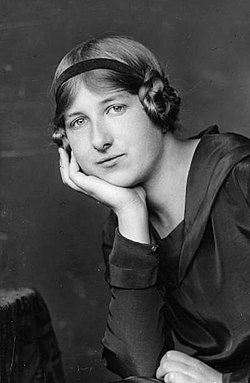
Imogen Clare Holst CBE (née von Holst; 12 April 1907 – 9 March 1984) was a British composer, arranger, conductor, teacher, musicologist and festival administrator. The only child of the composer Gustav Holst, she is particularly known for her educational work at Dartington Hall in the 1940s, and for her 20 years as joint artistic director of the Aldeburgh Festival. In addition to composing music, she wrote composer biographies, much educational material and several books on the life and works of her father.
From a young age Holst showed precocious talent in composing and performance. After attending Eothen School and St Paul's Girls' School, she entered the Royal College of Music, where she developed her skills as a conductor and won several prizes for composing. Unable to follow her initial ambitions to be a pianist or a dancer for health reasons, Holst spent most of the 1930s teaching, and as a full-time organiser for the English Folk Dance and Song Society. These duties reduced her compositional activities, although she made many arrangements of folksongs. After serving as an organiser for the Council for the Encouragement of Music and the Arts at the start of the Second World War, in 1942 she began working at Dartington. In her nine years there she established Dartington as a major centre of music education and activity. (Full article...)


.jpg&mode=clean)
.jpg&mode=clean)


.jpg&mode=clean)


- ... that WFMT classical music radio host Don Tait owned such a large collection of recordings that he had to buy a house and have its floor reinforced to accommodate the weight?
- ... that opera singer Charles Holland spent much of his career in Europe as opportunities in classical music for African Americans were limited?
Selected image
-
Image 1
 Ballet is a formalized form of dance with its origins in the French court, further developed in France and Russia as a concert dance form.
 -
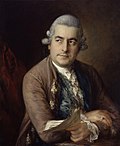 Image 2Painting: Thomas GainsboroughJohann Christian Bach (5 September 1735 – 1 January 1782) was a composer of the Classical era, the eighteenth child of Johann Sebastian Bach, and the youngest of his eleven sons. Bach was taught by his father and then, after the latter's death, by his half-brother C. P. E. Bach. Bach moved to Italy in 1754, and then to London in 1762, where he became known as the "London Bach". Bach's compositions include eleven operas, as well as chamber music, orchestral music and compositions for keyboard music. In 1764 Bach met Wolfgang Amadeus Mozart, who was eight at the time, and spent five months teaching him composition. He had considerable influence on Mozart, and was later described by scholars as his "only, true teacher".
This portrait of Bach was painted in 1776 by Thomas Gainsborough, as part of a collection started by Bach's former teacher Padre Martini. It now hangs in the National Portrait Gallery, London. -
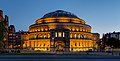 Image 3Photograph: David IliffThe Royal Albert Hall is a concert hall, seating a maximum of 5,272, on the northern edge of South Kensington, London. Constructed beginning in 1867, the hall was inaugurated on 29 March 1871. Since 1941 it has held The Proms, an eight-week summer season of daily orchestral classical music concerts and other events.
 -
 Image 4Photograph credit: William P. Gottlieb; restored by Adam CuerdenBilly Strayhorn (November 29, 1915 – May 31, 1967) was an American jazz composer, pianist, lyricist, and arranger, best remembered for his long-time collaboration with bandleader and composer Duke Ellington that lasted nearly three decades. Though classical music was Strayhorn's first love, his ambition to become a classical composer went unrealized because of the harsh reality of a black man trying to make his way in the world of classical music, which at that time was almost completely white. He was introduced to the music of pianists like Art Tatum and Teddy Wilson at age 19, and the artistic influence of these musicians guided him into the realm of jazz, where he remained for the rest of his life. This photograph of Strayhorn was taken by William P. Gottlieb in the 1940s.
 -
Image 5
 Stradivarius is one of the violins, violas, cellos and other string instruments built by members of the Italian Stradivari family, particularly Antonio Stradivari.
 -
 Image 6Photograph credit: Eugène Pirou; restored by Adam CuerdenJules Massenet (12 May 1842 – 13 August 1912) was a French composer of the Romantic era, best known for his operas. Between 1867 and his death, he wrote more than forty stage works in a wide variety of styles, from opéra comique to grand depictions of classical myths, romantic comedies and lyric dramas, as well as oratorios, cantatas and ballets. Massenet had a good sense of the theatre and of what would succeed with the Parisian public. Despite some miscalculations, he produced a series of successes that made him the leading opera composer in France in the late 19th and early 20th centuries. By the time of his death, he was regarded as old-fashioned; his works, however, began to be favourably reassessed during the mid-20th century, and many have since been staged and recorded. This photograph of Massenet was taken by French photographer Eugène Pirou in 1875.
 -
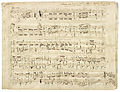 Image 7Sheet music for the Polonaise in A-flat major, Op. 53, a solo piano piece written by Frédéric Chopin in 1842. This work is one of Chopin's most admired compositions and has long been a favorite of the classical piano repertoire. The piece, which is very difficult, requires exceptional pianistic skills and great virtuosity to be interpreted. A typical performance of the polonaise lasts seven minutes.
 -
Image 8
 The Teatro alla Scala (or La Scala, as it is known), in Milan, Italy, is one of the world's most famous opera houses. The theatre was inaugurated on 3 August 1778, under the name Nuovo Regio Ducal Teatro alla Scala with Salieri's Europa riconosciuta.
 -
 Image 9Photo: W. J. Mayer; Restoration: Lise BroerA bust of the German composer and pianist Ludwig van Beethoven (1770–1827), made from his death mask. He was a crucial figure in the transitional period between the Classical and Romantic eras in Western classical music, and remains one of the most acclaimed and influential composers of all time. Born in Bonn, of the Electorate of Cologne and a part of the Holy Roman Empire of the German Nation in present-day Germany, he moved to Vienna in his early twenties and settled there, studying with Joseph Haydn and quickly gaining a reputation as a virtuoso pianist. His hearing began to deteriorate in the late 1790s, yet he continued to compose, conduct, and perform, even after becoming completely deaf.
 -
 Image 10Photo: Guillaume PiolleThe anatomy of a Périnet piston valve, this one taken from a B♭ trumpet. When depressed, the valve diverts the air stream through additional tubing, thus lengthening the instrument and lowering the harmonic series on which the instrument is vibrating (i.e., it lowers the pitch). Trumpets generally use three valves, with some variations, such as a piccolo trumpet, having four. When used singly or in combination, the valves make the instrument fully chromatic, or capable of playing all twelve pitches of classical music. Trumpets may also use rotary valves instead.
 -
Image 11

A picture of the first theatre drawn shortly before it burned down in 1808.
The Royal Opera House is an opera house and major performing arts venue in the London district of Covent Garden. The large building, often referred to as simply "Covent Garden", is the home of The Royal Opera, The Royal Ballet and the Orchestra of the Royal Opera House.


.jpg&mode=clean)


Topics
|
|
Things you can do
 |
Here are some tasks awaiting attention:
|
Categories

Associated Wikimedia
The following Wikimedia Foundation sister projects provide more on this subject:
-
 Commons
Free media repository -
 Wikidata
Free knowledge base -
 Wikiquote
Collection of quotations -
 Wikisource
Free-content library -
 Wikiversity
Free learning tools -
 Wiktionary
Dictionary and thesaurus


