


 | Portal maintenance status: (June 2018)
|
The Liberalism portal
Liberalism is a political and moral philosophy based on the rights of the individual, liberty, consent of the governed, political equality, right to private property, and equality before the law. Different liberals espouse various and sometimes conflicting views depending on their understanding of these principles but generally support liberal democracy, private property, market economies, individual rights (including civil rights and human rights), secularism, rule of law, economic and political freedom, freedom of speech, freedom of the press, freedom of assembly, and freedom of religion. Liberalism is frequently cited as the dominant ideology of modern history.
Liberalism became a distinct movement in the Age of Enlightenment, gaining popularity among Western philosophers and economists. Liberalism sought to replace the norms of hereditary privilege, state religion, absolute monarchy, the divine right of kings, and traditional conservatism with representative democracy, rule of law, and equality under the law. Liberals also ended mercantilist policies, royal monopolies, and other trade barriers, instead promoting free trade and marketization. The philosopher John Locke is often credited with founding liberalism as a distinct tradition based on the social contract, arguing that each man has a natural right to life, liberty and property, and governments must not violate these rights. While the British liberal tradition emphasized expanding democracy, French liberalism emphasized rejecting authoritarianism. (Full article...)
Selected article -
The Liberal Republican Party was an American political party that was organized in May 1872 to oppose the reelection of President Ulysses S. Grant and his Radical Republican supporters in the presidential election of 1872. The party emerged in Missouri under the leadership of Senator Carl Schurz and soon attracted other opponents of Grant; the Liberal Republicans decried the scandals of the Grant administration and sought civil service reform. The party opposed Grant's Reconstruction policies, particularly the Enforcement Acts. It lost in a landslide, and disappeared from the national stage after the 1872 election.
The Republican Party had emerged as the dominant party in the aftermath of the Civil War, but many original Republicans became dissatisfied with the leadership of President Grant. Prominent liberal leaders like Schurz and Lyman Trumbull had been leaders in the fight against slavery and for the first stages of Reconstruction. They considered the task accomplished, and thought continued radical policies to be oppressive. By 1872, they demanded an end to Reconstruction and a restoration of self-government to the South. (Full article...)
Selected biography -

Thomas Hill Green (7 April 1836 – 26 March 1882), known as T. H. Green, was an English philosopher, political radical and temperance reformer, and a member of the British idealism movement. Like all the British idealists, Green was influenced by the metaphysical historicism of G. W. F. Hegel. He was one of the thinkers behind the philosophy of social liberalism. (Full article...)
List of selected biographies
|
|---|
Selected quote

General images
-

-
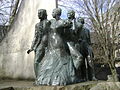 Image 2Monument to the liberals of the 19th century in Agra del Orzán neighborhood, La Coruña, Galicia (Spain) (from Liberalism)
 -
 Image 3The US federal minimum wage if it had kept pace with productivity compared to the actual wage (from Neoliberalism)
 -
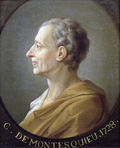
-
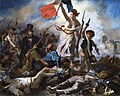 Image 5The iconic painting Liberty Leading the People by Eugène Delacroix, a tableau of the July Revolution in 1830 (from Liberalism)
 -

-
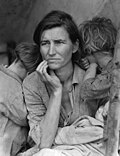 Image 7The Great Depression, with its periods of worldwide economic hardship, formed the backdrop against which the Keynesian Revolution took place (the image is Dorothea Lange's Migrant Mother depiction of destitute pea-pickers in California, taken in March 1936). (from Liberalism)
 -
 Image 8As a liberal nationalist, K. J. Ståhlberg (1865–1952), the President of Finland, anchored the state in liberal democracy, guarded the fragile germ of the rule of law, and embarked on internal reforms. (from Liberalism)
 -
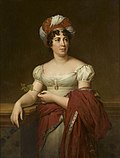
-
 Image 10John Milton's Areopagitica (1644) argued for the importance of freedom of speech. (from Liberalism)
 -

-
 Image 12Pamphlet calling for a protest of economic policy in 1983 following the economic crisis (from Neoliberalism)
 -
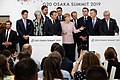 Image 13The European Union–Mercosur free trade agreement, which would form one of the world's largest free trade areas, has been denounced by environmental activists and indigenous rights campaigners. (from Neoliberalism)
 -

-
 Image 15John Locke was the first to develop a liberal philosophy, including the right to private property and the consent of the governed. (from Liberalism)
 -
 Image 16GDP per capita in Chile and Latin America 1950–2010 (time under Pinochet highlighted) (from Neoliberalism)
 -
 Image 17Chilean (orange) and average Latin American (blue) rates of growth of GDP (1971–2007) (from Neoliberalism)
 -

-
 Image 19T. H. Green, an influential liberal philosopher who established in Prolegomena to Ethics (1884) the first major foundations for what later became known as positive liberty and in a few years, his ideas became the official policy of the Liberal Party in Britain, precipitating the rise of social liberalism and the modern welfare state (from Liberalism)
 -
 Image 20John Stuart Mill, whose On Liberty greatly influenced 19th-century liberalism (from Liberalism)
 -
 Image 21The 2017–2018 Russian protests were organized by Russia's liberal opposition. (from Liberalism)
 -

-
 Image 23Ronald Reagan (left) and Margaret Thatcher (right) were responsible for the popularisation of Neoliberalism. (from Neoliberalism)
 -
 Image 24Unemployment in Chile and South America (1980–1990) (from Neoliberalism)
 -
 Image 25Sismondi, who wrote the first critique of the free market from a liberal perspective in 1819 (from Liberalism)
 -

-
 Image 27John Maynard Keynes, one of the most influential economists of modern times and whose ideas, which are still widely felt, formalized modern liberal economic policy (from Liberalism)
 -

-

-
 Image 30Raif Badawi, a Saudi Arabian writer and the creator of the website Free Saudi Liberals, who was sentenced to ten years in prison and 1,000 lashes for "insulting Islam" in 2014 (from Liberalism)
 -
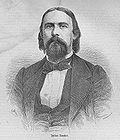
-
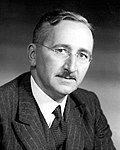
-
 Image 33Execution of José María de Torrijos y Uriarte and his men in 1831 as Spanish King Ferdinand VII took repressive measures against the liberal forces in his country (from Liberalism)
 -
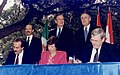 Image 34U.S. President Bush, Canadian PM Mulroney, and Mexican President Salinas participate in the ceremonies to sign the North American Free Trade Agreement (NAFTA). (from Neoliberalism)
 -

_(1).jpg&mode=clean)


.jpg&mode=clean)


.jpg&mode=clean)

.jpg&mode=clean)

.png&mode=clean)
%2C_%25C3%25A9crivain_et_homme_politique_-_P1679_-_Mus%25C3%25A9e_Carnavalet_(cropped).jpg&mode=clean)

.jpg&mode=clean)

.jpg&mode=clean)
_b_269.jpg&mode=clean)
.jpg&mode=clean)


Subcategories

Related portals


WikiProjects

Topics

Recognized content


Associated Wikimedia
The following Wikimedia Foundation sister projects provide more on this subject:
-
 Commons
Free media repository -
 Wikidata
Free knowledge base -
 Wikiquote
Collection of quotations -
 Wikisource
Free-content library -
 Wikiversity
Free learning tools -
 Wiktionary
Dictionary and thesaurus


