
Format
Skip to main page content

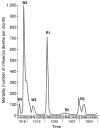
Figure 1.
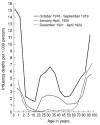
Figure 2.
Log in
Show account info
Abstract
Influenza A viruses infect large numbers of warm-blooded animals, including wild birds, domestic birds, pigs, horses, and humans. Influenza viruses can switch hosts to form new lineages in novel hosts. The most significant of these events is the emergence of antigenically novel influenza A viruses in humans, leading to pandemics. Influenza pandemics have been reported for at least 500 years, with inter-pandemic intervals averaging approximately 40 years.
Figures

Three waves of the 1918–1919 influenza pandemic, Breslau, June 1918–December 1922

Age-specific influenza mortality, Breslau, July 1918–April 1922
References
-
- Mulder J, Hers JFP. Influenza. Groningen (Netherlands): Wolters-Noordhoff Publishing; 1972.
-
- Taubenberger JK, Reid AH, Fanning TG. Capturing a killer flu virus. Sci Am. 2005;292:48–57. - PubMed
Publication types
- Historical Article
- Research Support, N.I.H., Intramural
- Review
MeSH terms
- Animals
- Disease Outbreaks / history*
- Disease Reservoirs / virology
- History, 19th Century
- History, 20th Century
- History, 21st Century
- Humans
- Influenza A Virus, H1N1 Subtype*
- Influenza in Birds / epidemiology
- Influenza in Birds / history
- Influenza, Human / epidemiology
- Influenza, Human / history*
- Poultry
Grants and funding
LinkOut - more resources
Full Text Sources
Other Literature Sources
Medical