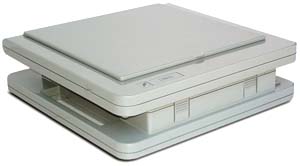
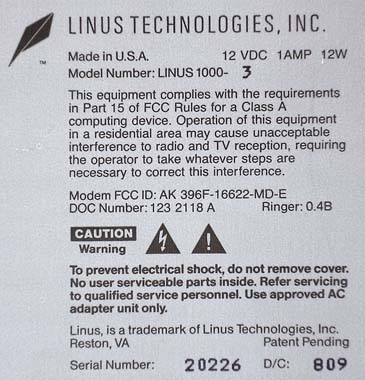
Linus Write-Top computer
Using an advanced symbol-recognition algorithm, the Linus ("of or about lines") converts your scrawls into perfect text at a rate of about 5 characters per second. It recognizes uppercase, lowercase, numbers, symbols - up to 75 total.


 Examples of uses include:
The Write-Top is IBM PC-compatible, with standard serial, printer, external 5 1/4-inch floppy ("D:" drive) ports.
There's also a standard keyboard port so it can be used for word processing or other uses.
The optional internal modem allows transfer of data to remote systems over the telephone line.
An external floppy drive can be attached for local data storage and transfer. The internal 3.5-inch floppy is always available.
A non-volatile battery-backed removeable solid-state RAM card holds up to 512K of data, and is recognized as the "C:" drive by the
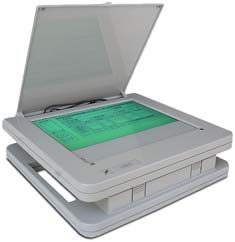
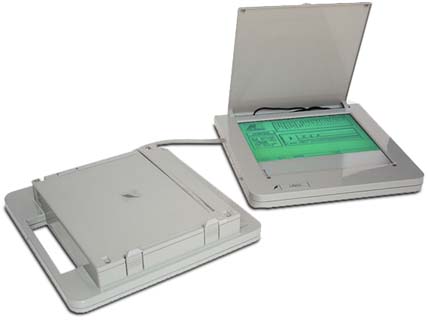
The internal rechargeable battery will supply the entire system with power for approximately 5 hours.
Although the screen is small, 5-by-8 inches, it has an attractive electroluminescent backlight.
The Write-Top cannot read any handwriting at all, until it is first 'trained' to recognize a persons particular
script, which is then saved as a 'library'.
Anyone else who wishes to use the system must also train it to read their writing as well, or load a
previously made library of their own.
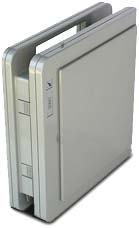
 Actually, since you teach it your specific longhand, the Write-Top can even learn and recognize
Klingon
and convert it into standard ASCII text.
Actually, since you teach it your specific longhand, the Write-Top can even learn and recognize
Klingon
and convert it into standard ASCII text.
Unfortunately, the Write-Top was not a commercial success - less than 2000 were ever sold, according to sources.
Just two years later in 1989, GRiD released their GRiDPad, having many of the same features as the Write-Top, but weighing half as much, and displaying twice the screen resolution.
Sometime before 1989, the Write-Top was apparently acquired or licensed by TRW, as this
AKA:

|
|
Return to the Obsolete Technology Homepage