TypeX - The Story of
The following has been transcribed from a GCHQ historical publication written by Dr David Abrutat, GCHQ Departmental Historian to commemorate the 75th Anniversary of the signing of UKUSA
FORWARD
Prototyped in 1937, the TypeX1 cipher machine was used by the British military during the Second World War to encrypt their secret communications. It was to become so popular that nearly 12,000 machines were built (8200 Mark II and around 3000 Mark IV machines). They were also widely used across the Commonwealth nations, notably in New Zealand and Canada, and would remain in service until the early 1970s.
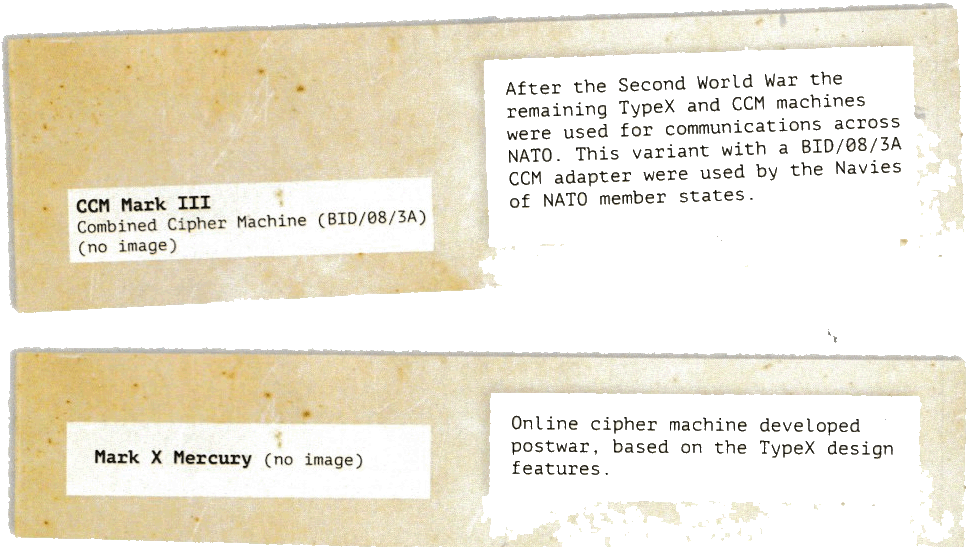
In 1943, as the bilateral partnership was beginning to mature, the British and Americans agreed upon the standards by which the secure exchange of cipher messages could take place. The common machine that was developed became known as the Combined Cipher Machine (CCM), a variant of the British TypeX machine that had been introduced across all three service arms in the summer of 1940. After the war, in the early years of NATO, CCM machines were used for secure communications between NATO and its member states.
The foundations by which the signals intelligence agencies in Britain and America could communicate securely would build a trusting relationship that would be cemented by the signing of the BRUSA (now known as UKUSA) Agreement on the 5th March 1946. The agreement was signed by Colonel Patrick Marr-Johnson on behalf of the London Signals Intelligence Board (LSIB) and Lt General Hoyt Vandenberg in his role as the Chairman of the US State-Army-Navy Communications Intelligence Board (STANCIB). It was to endure as the longest and most successful intelligence sharing partnership in the world.
1The name for the machines has varied from TypeX or Typex. For consistency I am using TypeX throughout. Originally they were referred to as RAF Enigma type with X-attachment.
Development
The British Government established an Inter-Departmental Cypher Committee in 1926 with the task of investigating replacing the cypher book systems in use by the Armed Forces and Government Departments with a new cypher machine. Over the next few years the Committee evaluated a number of options but failed to make a decision on a suitable machine. The Royal Air Force (RAF) made the decision to independently fund its own project. In 1934 a signals officer with the RAF, Wing Cdr Oswyn Lywood, asked the Government Code and Cypher School (GC&CS) if he could borrow one of the German Enigma machines in their possession. He intended to replicate the design using parts from the RAF teletype machines. Lywood would become a leading protagonist in RAF Signals and Communications Security during the Second World War.
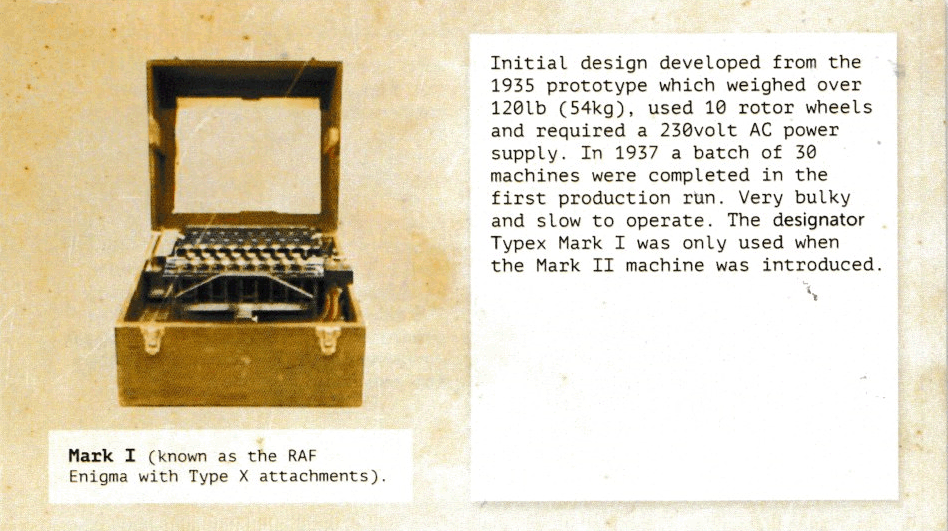
The cipher machine was developed over the course of three years at the RAF Wireless workshop, which was part of No.l Maintenance Unit at RAF Kidbrooke in southeast London, by the quartet of Wing Commander Oswyn Lywood, Fit Lt Coul-son, Sgt Albert Lemon and Sgt EW Smith the sites workshop foreman. They added two more rotor positions and the machine was designed so it could automatically print the enciphered text, so they could be used on the Defence Teleprinter Network (DTN). Weighing over 120 pounds the original machine was referred to as the RAF Enigma with Type-X attachments. With these additional rotors within the scrambler unit the original machine was thought to be more secure than the commercial German Enigma versions.
Lord Louis Mountbatten, the Royal Navy's Fleet Wireless Officer with the Mediterranean Fleet, recommended in 1936 that the Navy adopt a cipher machine for encrypting Naval communications at sea, as the German Kriegsmarine had been doing with the Enigma since 1926.
In 1937 Lywood presented his prototype design to the Cipher Committee who were not enthusiastic about the project and refused to finance any further development, which made Lywood approach a small family run firm on the junction of Addiscombe Road and Cherry Orchard Road in East Croydon, called Creed & Company, to begin production. Creed had the contract for building the electromechanical teletype machines for the then General Post Office (GPO) and had been founded in 1912 by Frederick George Creed and Danish telegraph engineer Harald Bille.
2Sgt EW Smith was co-designer of the original TypeX machines and later its improved derivative MERCURY
The first production run of the machines, under the direction of its Chief Designer Mr Kirk and Managing Director Mr F E Brake, delivered 29 new machines based on the Lywood prototype and were given the name Type-X Mark I and were immediately delivered for use in the RAF Headquarters. This offline wired-wheel TypeX encryption machine was based on the principles of the German Enigma, but was invariably more complex in its design.
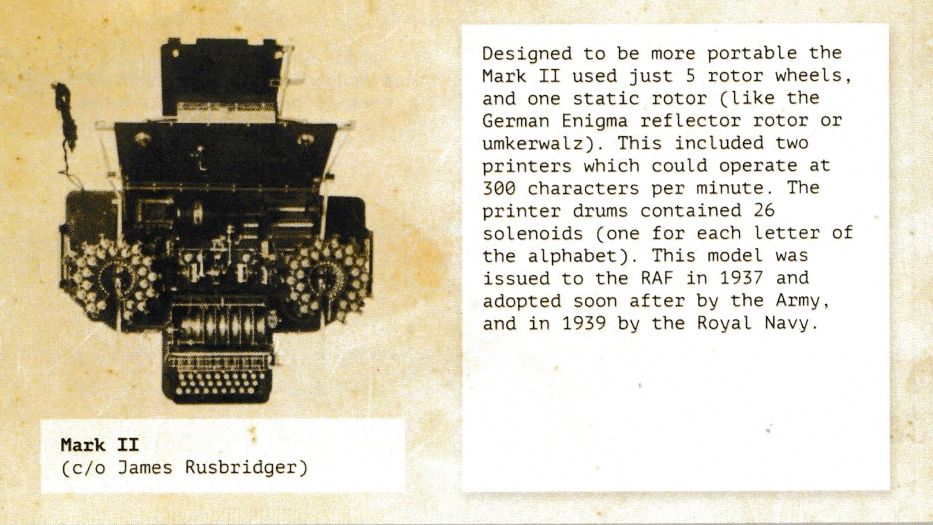
Over the next few weeks the company made some significant changes to the design and on the 28th May 1937 a new variant was produced, which they called the TypeX Mark II. On the 14th June that year it was demonstrated to the Cipher Committee in London who were duly impressed with the new model, and approved a new production run of 350 Mark II machines, each costing ??107. 8s. Od.
The machine was originally designed to cover teletype traffic, in so becoming the world's first online cipher machine, able to process thirty times the traffic per minute than manual machines, though in practice the majority of TypeX machines were used manually offline during the war. TypeX would be the central to Britain's cryptographic salvation. TypeX had been developed by the RAF, but it came into extended use by all three Services in the beginning of 1940. By July 1942 the Royal Navy3 had 33 machines (and 6 spares) deployed as far afield as West Africa, Ottawa in Canada, Malta, Alexandria in Egypt, Kilindini in Kenya and Melbourne, Australia. The Army had 15 operational machines and 4 spare (being used in the Middle East, India, Malta and West Africa), whilst the RAF operated 5 machines (all in the Middle East).
The demands at the time were for 84 operational machines for immediate use and 24 for spares. Creed could not produce them fast enough. As production was scaled up. Creed relocated its production to a new site at Treforest in Wales. 3232 Mark II machines had been produced by September 1941 at a cost of over ??300,000 (over ??15 million in today's money). The total machine requirement for 1943 and 1944 was for 6652 machines. The 1945 requirement for Mark II machines was 2550 (Army 1250, RN 500 and RAF 800). Their production would become something of an industrial effort.
3The Royal Navy originally ordered five machines for trials which they received in the summer of 1939, which went quickly into operational use in th Admiralty and in Gibraltar and Malta by the end of 1939.
The bulk of Bletchley Park's ULTRA traffic during the war would be passed over TypeX machines - often the route by which traffic could reach GC&CS was decided by the TypeX capacity at the originating centre. The machines would operate at a set speed of 30 words/minute.
The machines were designed to be robust. One Royal Navy TypeX operator recalled,
| 'during WWII, I used the Typex machine many times....our instructions were to destroy the machine if it was in danger of falling into enemy hands. A heavy mallet was supplied with the machine. When Singapore fell to the Japanese all the rotors from the machine at the signal station were packed in a bag and taken to the evacuating ship. The machine itself was thrown from the top of a four-storey building (easier than using a hammer) but on examination all it had was a slight dent so it was ditched in the harbour.' |
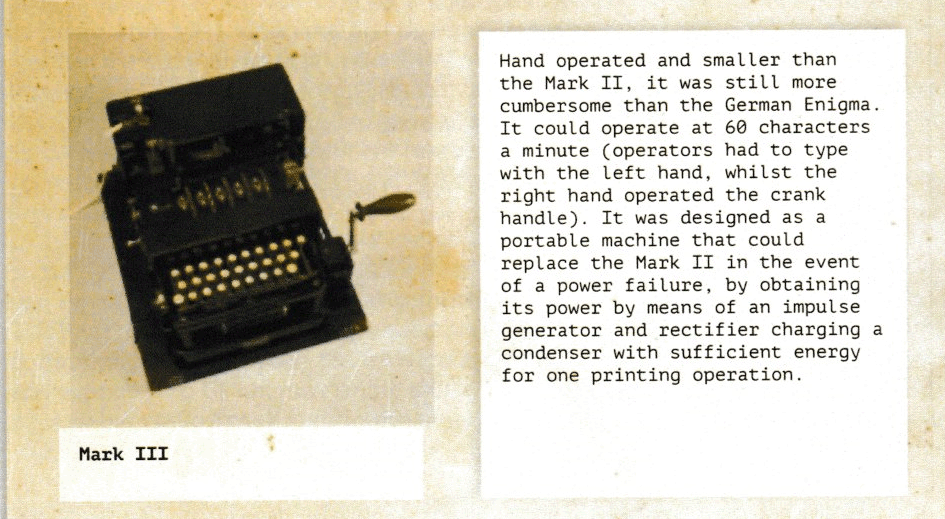
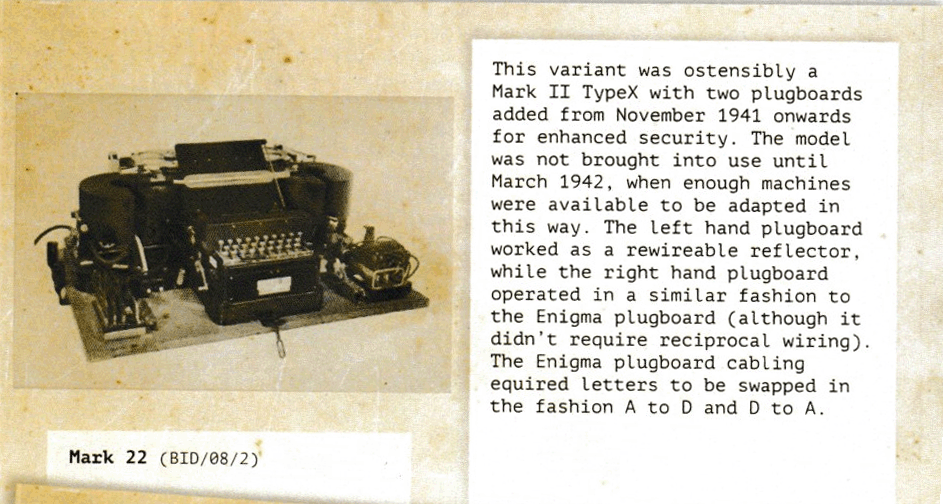
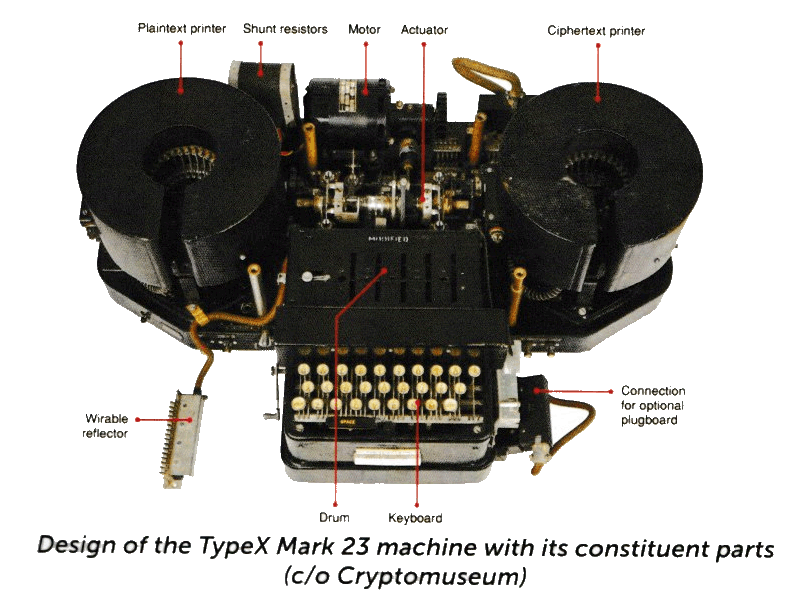
The machines were reliant on their AC power source - but if this was not available a rotary convertor could be used to operate from a DC supply. In 1941 Creed began introducing the rewireable reflector (plugboard) into the design, as well as hollow drums with reversible wired inserts replacing the previous solid drums. The Royal Navy didn't begin introducing the Naval plugboard setting keys until March 1942. All three Services had to wait until May 1944 to get enough plugboards to introduce an inter-service plugboard key.
As with the German Enigma design, the rotors contained scrambled wiring with 26 contacts on each to provide 26 paths through the 'maze' with a reflector bouncing the current back through the rotors in the opposite direction. All the early models used an Enigma style lampboard to indicate the cipher character. Later models provided paper tape output of both the plain text and cipher.
The machine had to work in sync with a 'setting pad' which was used to provide the operators with the initial settings of the TypeX rotors prior to the encipherment of the message. The recipient would need this information in order to set up his machine identically for decipherment. A five-letter setting would be chosen by the originator at random. It would be conveyed to the addressee by means of page, row and column number sent as an indicator prior to the start of the message. It was imperative that operators had identical copies of the message setting pad, and also vital that each setting was only used once and once only.
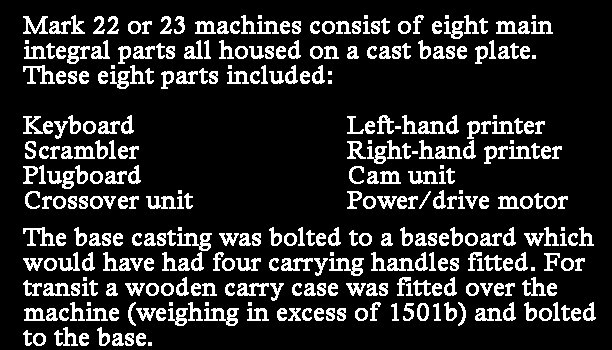
The TypeX rotors had detachable rotor cores which were known as 'inserts' allowing them to be switched between different rotors (they could also be inserted in two different ways which doubled the mathematical output). These were first introduced in November 1942. As the war developed significant resources had to be put into the production of TypeX rotors, reflectors and cores. An entire RAF unit of over 200 personnel were tasked with just the wiring of the rotors.
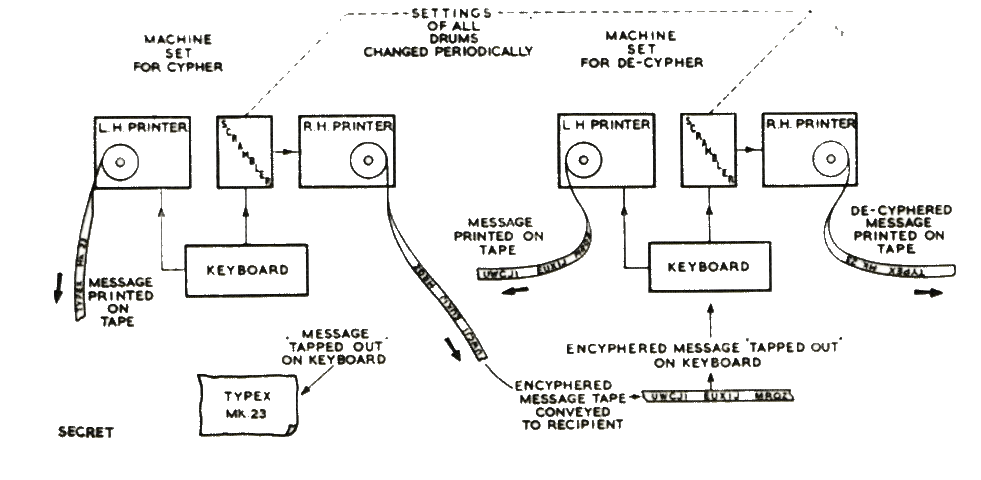
The main function of the machine was to convert a plain language message, typed out on the keyboard, into an enciphered message consisting of five-letter units which were printed on paper tape. To ensure the secrecy of any enciphered message the cipher was automatically changed by a scrambler unit each time a key was operated on the keyboard.
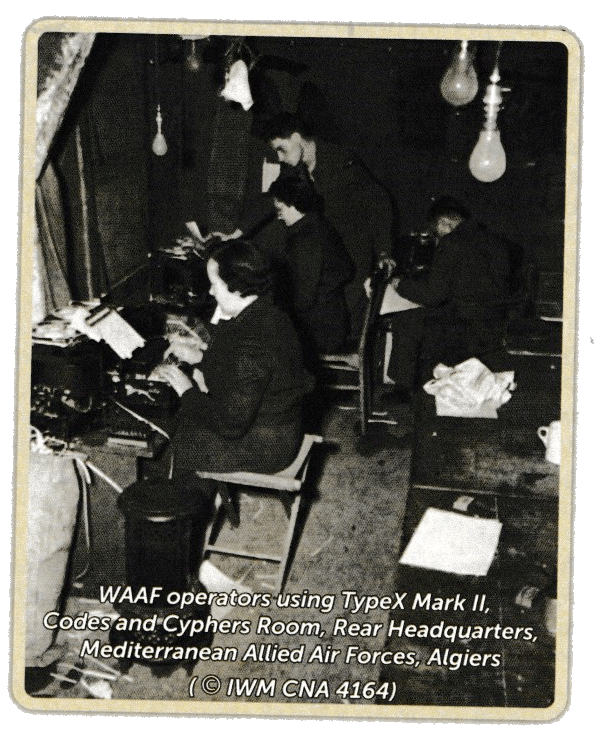
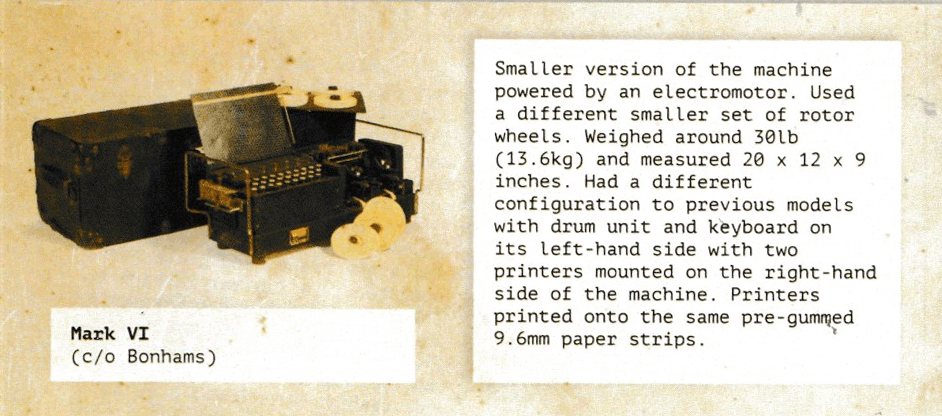
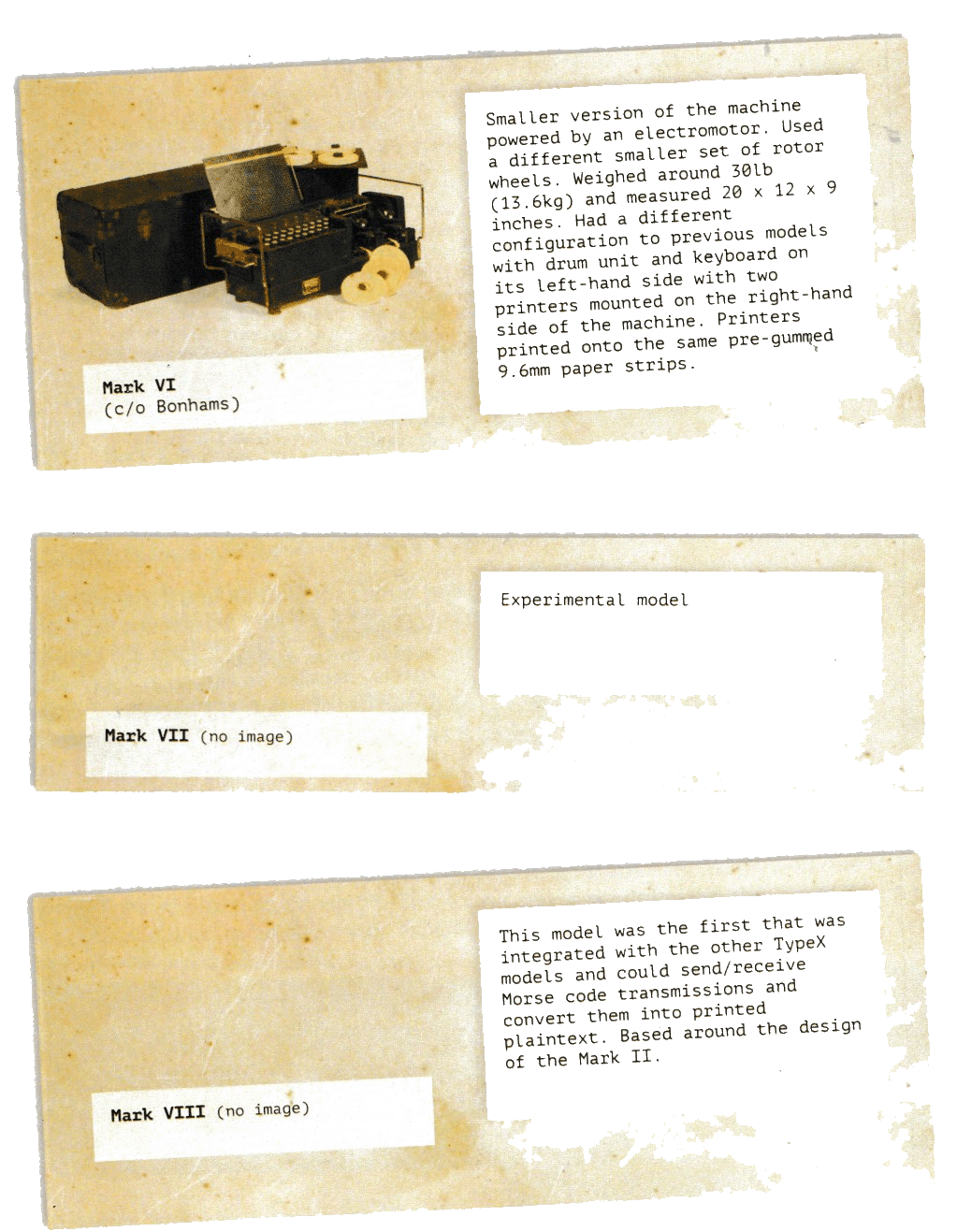
A plain language message was handed to a TypeX operator who set the machine to cipher. The operator then would have tapped out the message on the keyboard. The two printer heads on the machine operated simultaneously, the left-hand printer head printed the message in plain language. The right-hand printer head printed the message in five-letter cipher groups. The tape bearing the enciphered message was detached from the machine, gummed to a message form and despatched to the relevant addressee.
The TypeX operator receiving the message would set the machine to 'decipher'. The enciphered version of the message was tapped out on the keyboard. The two printer heads would begin operating and the left-hand one printed the enciphered message, while the right-hand printer printed the deciphered version of the message.
The TypeX operator receiving the message would set the machine to 'decipher'. The enciphered version of the message was tapped out on the keyboard. The two printer heads would begin operating and the left-hand one printed the enciphered message, while the right-hand printer printed the deciphered version of the message.
From Russia with Love
In March 1944 two TypeX machines were sent to Northern Russia, one to Archangel, the other to the Y-Service unit in Polyarnoe, to replace two worn out machines which were being returned to the UK for servicing. The new machines were impounded by Russian customs and required the intervention from the British Ambassador in Moscow to get them released. Three months later eight further TypeX machines were ordered by the Senior British Naval Officer (SBNO) for use by British Naval forces operating in Northern Russia. It was quoted

By mid-June 1944 the Russian authorities reluctantly approved the import of the eight TypeX machines.
Machines on Ship
The Royal Navy were slow on the uptake ot lypex. it was decreed early on that tor security reasons it was not intended that TypeX would be brought into service on RN ships en mass until all the ships concerned had been fitted with the machines. But the Navy prioritised th installs at shore establishments both abroad and at home, each supplied with a minimum c three sets of drums (one each for cipher, code and Inter-service use). When the ships bega to install the Mark II machines the majority were put onto RN Cruisers, Aircraft Carriers, Battleships and Armed merchant cruisers. Flotilla leaders were to have two machines onboard. Ashore the Mark II machines were also in service with the likes of Commander-in-Chief Portsmouth, Flag Officer Dover and the Rear Admiral overseeing the Naval Air Stations.
Feedback was regularly sought on the reliability and use of the machines (sometimes relying on some in-house repairs) - one Flag Officer for the Tyne Area commenting,
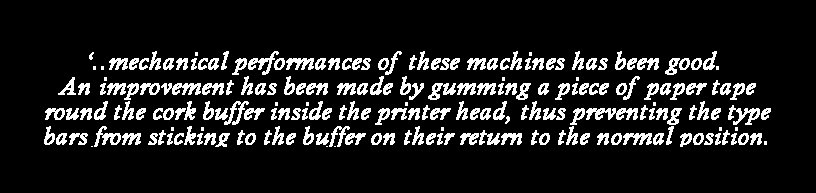
A Flag Officer in Greenock wrote:-

Bletchley Park and Machine Maintenance
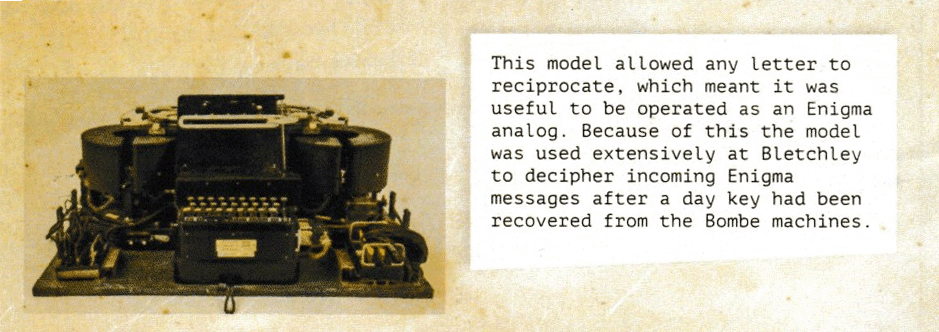
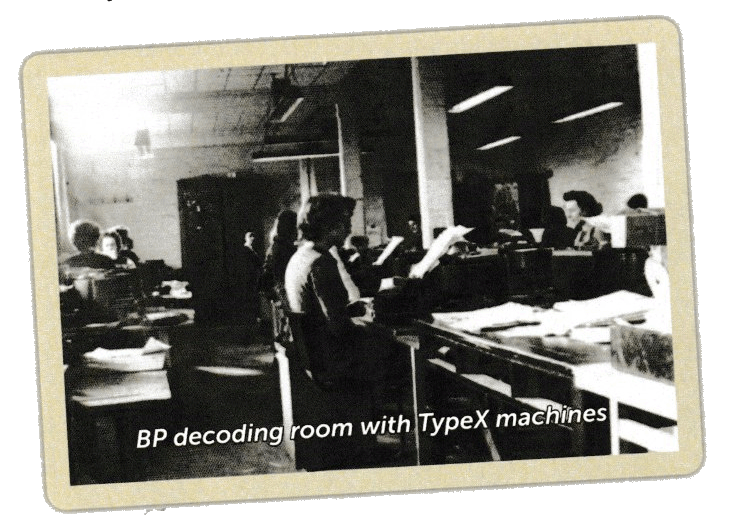
By February 1941 there were just four TypeX machines in operation at Bletchley TypeX was adapted to function as an Enigma deciphering machine and a number were installed in Hut 6 where the Enigma first yielded to attack. The initial designs of the machine were plagued by numerous weaknesses including poor design or inferior materials used.
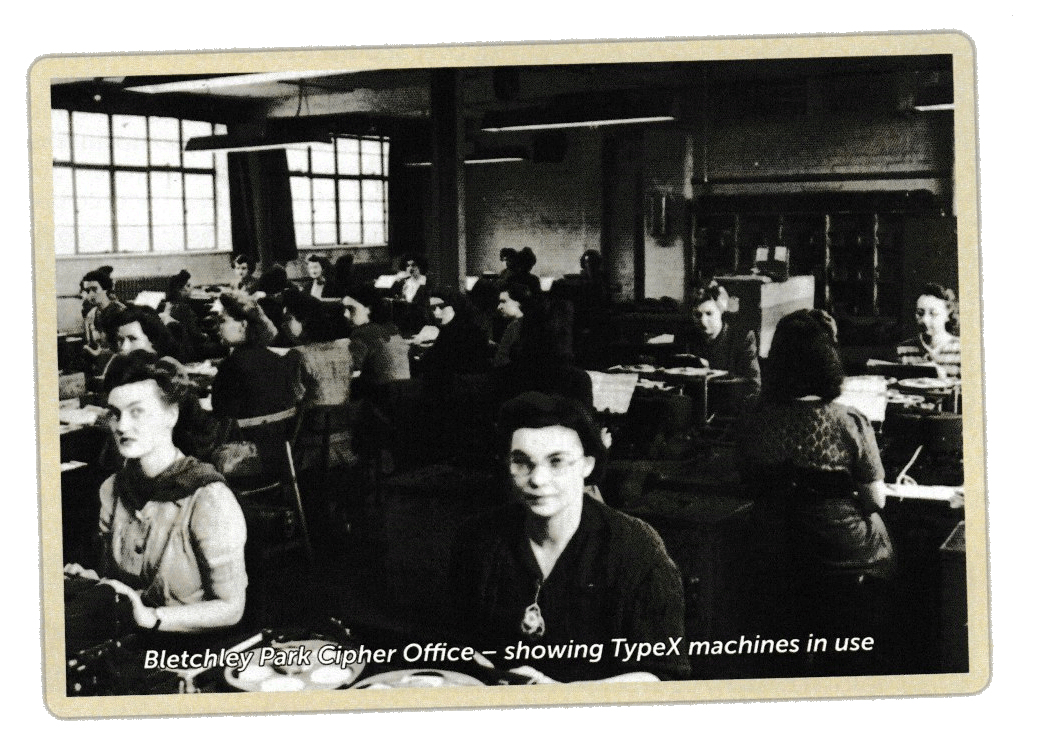
When they were being operated over a 24hr period the machines were being overused. The faults did not entirely lie with the machine and its manufacture, but more often in the 'inexpert manipulation and lack of care' from untrained operators. There were only three mechanics available at Bletchley to service them, and a genuine lack of spare parts.
The introduction of TypeX was muted at the time as an 'enormous advance' but there was one grave disadvantage - it produced only a single tape copy of the message (which had to be stuck on paper for the receiving section to read). Subsequently there were no copies of individual messages for record keeping. It was a monotonous and time-consuming task which produced severe strain on the under-pressure staff in places like the Cipher Office at Bletchley. It was noted, 'this strain was partly due to the slow working of the machines but mainly to the lack of proper typing chairs to give support to the operators backs and to the foul condition of the atmosphere during black-out hours.' The office itself was badly lit, had poor ventilation and a lack of good furniture which put additional strains on the staff - this office not surprisingly had the highest sickness rates at Bletchley during the war.
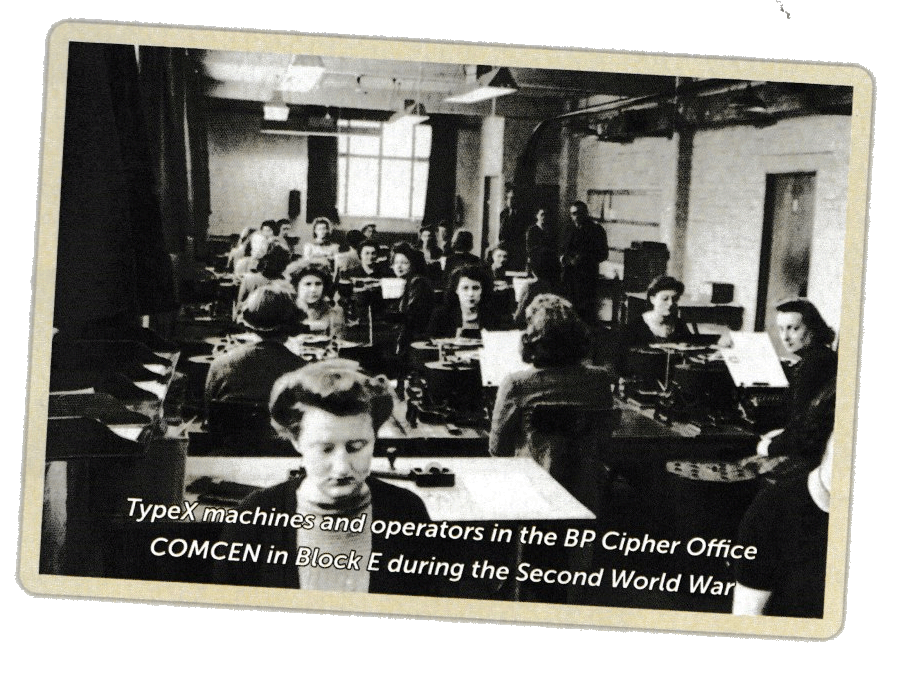
The overwhelming noise of multiple TypeX machines in operation was a significant problem for the working conditions. A survey of the TypeX room noise levels at Bletchley park was reported on and it was found that ???the high level of machine noise...is amplified by the reflective and resonant wall surface. The major need here is for maximum sound absorption.'The report suggested that the ceiling, doors and wall surfaces should be covered with a acoustic-celotex or Type 'B' material to absorb the noise. They also suggested the addition of sound absorbing partitions between the individual machines. Much of the thumping noise produced by the machines is transmitted through the table to the floor' for which they suggested using sponge rubber attachments on the table legs. The survey team also reported that 'we feel that an improvement of the ventilation system would be of great benefit.'
The RAF did have its own TypeX training school but places were all reserved for WAAF personnel. A plan was conceived in 1942 to teach the TypeX operators to read the slip off direct on to the machine itself, so cutting out the intermediate typing process. It was estimated that a course for inexperienced low-grade staff to attain 30 words/minute speeds would need a course lasting 10-12 weeks. As methods were refined the course duration was reduced to 5 weeks. A good TypeX operator could do 40 words per minute on the keyboard.
In 1943 GC&CS made desperate efforts through the Chairman of the Y Committee to get spares for the machines. It was critical that they needed to rectify the problem of having 8-10 machines constantly out of action.
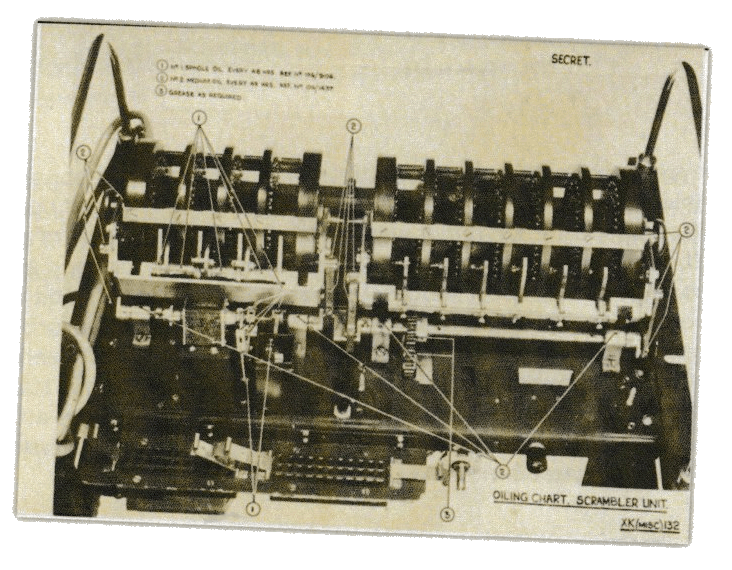
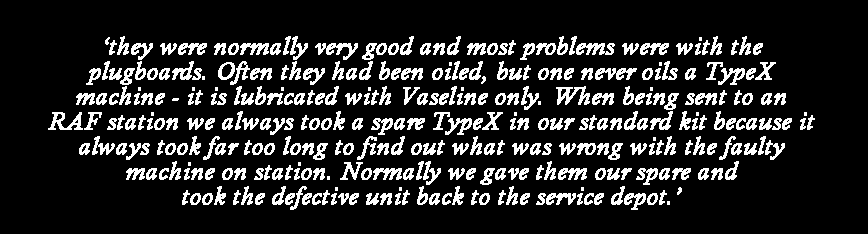
Servicing the machines was always a challenge. One RAF Technician who worked on them in the 1950s recalled.
A former Foreign Affairs Canada communications technician, John Roy, also had fond memories of the frustrations of working with TypeX,

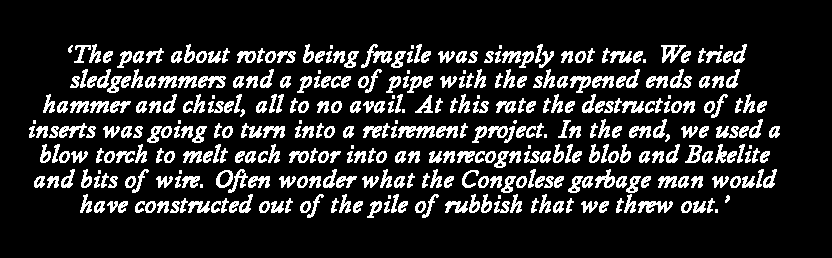
During the deployment Roy and his colleague were tasked with destruction of the TypeX rotors.
Collaboration
Interactions with the American cryptanalysis and SIGINT community had developed in the early stages of the war. Collaboration increased at pace after the Sinkov Mission had deployed to Bletchley Park in 1941 and the beginnings of a strong bilateral partnership with the Americans would emerge.
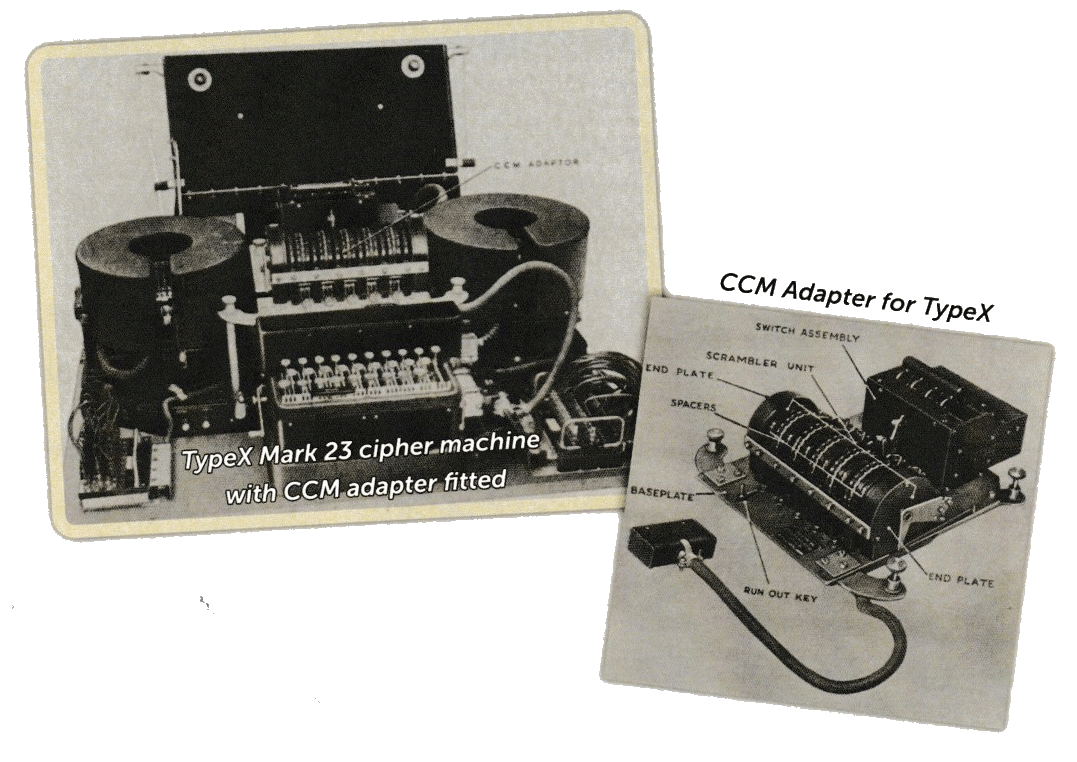
The United States entered the war in 1942, after the Japanese attack on Pearl Harbour. That year a USN officer, Commander Don Seiler, was given a TypeX Mk VIII which he subsequently modified to integrate with the American M-134 machine (known as SIGABA to the US Army and ECM to the US Navy). At the time it was US policy to prevent foreign personnel operating American cipher machines. The TypeX convertor became known as the Combined Cipher Machine (CCM). Until the American SIGABA machine became effective in the middle of 1943, TypeX was the only high-grade cipher system available for combined operations. The American agencies were to receive original TypeX messages in significant volumes.
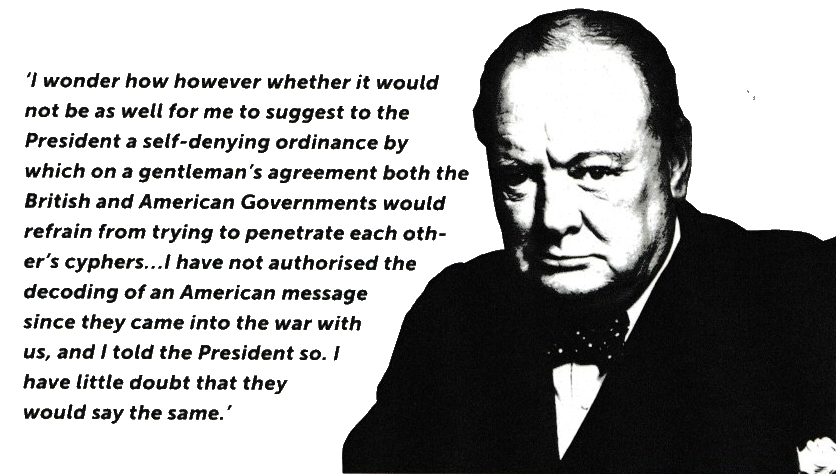
Initially the British thought this practice may well compromise TypeX with the American cryptanalysts looking to exploit the machine underpinning ciphers. British PM Winston Churchill was to state at the time;
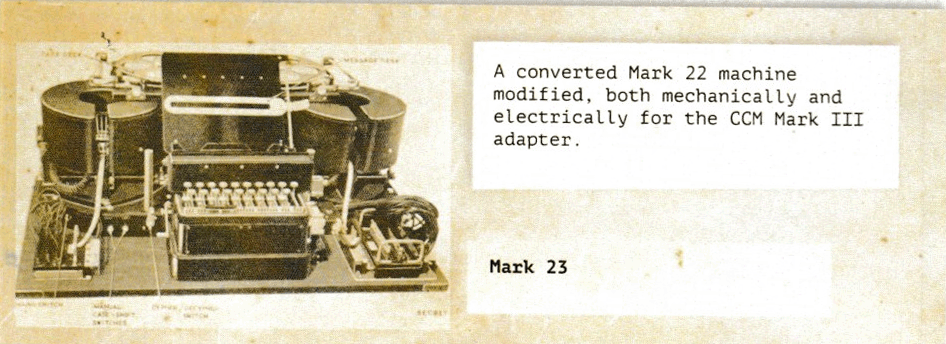
It was Lt Cdr WD Sutcliffe RNVR (an Admiralty Technical Cypher Machine specialist) who first put forward the technical specifications for fitting a plugboard at the input end of the Mark II machine to take the CCM Mark III adaptor. All CCM variants were used within NATO after the Second World War, until at least 1955. Cryptanalysts had been aware of vulnerabilities with the machine from as early as 1948.
Compromises and Performing Fleas
There was always going to be a risk with Allied forces operating in occupied Europe or North Africa that a TypeX machine might get into the hands of the German cryptologic services (German Airforce Cipher Bureau Luftwaffe Chi-Stelle, the German Armed Forces General Staff Oberkommando der Wehrmacht OKW or the German Army General Staff Oberkommando des Heeres OKH). Signals intelligence success during the war would be down to the cat-and-mouse games to fuel a cryptological advantage.
TypeX daily machine setting keys for May and June 1940 were captured in Belgium from the BEF (British Expeditionary Force). On the basis of this the Germans concluded the new machine had five wheels and at least two wheels did not move during encipherment, and there was a daily machine setting consisting of the wheel order. A German report into TypeX dated 27th September 1940 explained that,

There are a number of TICOM4 interviews in the archives that suggest the Germans did capture a TypeX machine during the Dunkirk evacuation in the summer of 1940. Documents that were uncovered at Glasenbach in Austria in early 1947 suggested the Germans had abandoned their attempts on the machine in 1941. The Oberkommando des Heeres (OKH) had put significant effort into breaking the TypeX cipher system. By May 1941 the OKH cipher bureau or Inspectorate (In) 7/IV had succeeded in forming an accurate picture of how the machine worked. They had almost completed their research when they found out OKW were in possession of three captured TypeX machines (without the rotor wheels) which had been obtained some eleven months earlier! Some progress was made on TypeX traffic between March-May 1940 but nothing was read. One significant report issued by In 7/IV in December 1941 wrote that without a further pinch the machine was insoluble.
Commandant Gustave Bertrand, a senior officer with the French Army’s Deuxieme Bureau, informed the British on the 19th July 1942, that the German Air Ministry had been exploiting the TypeX machines left behind at Dunkirk but, lacking the required rotors, they had not progressed far.
4TICOM (Target Intelligence Committee) was a joint covert British/American unit established in the summer of 1944 to confiscate cryptologic equipment and documents as well as track down German cryptanalysts and interrogate them.
It is widely believed by many intelligence historians that the British 8th Army had left behind a TypeX machine with its accompanying keys and rotors during the Battle of Tobruk in North Africa in June 1942. When Tobruk fell for the second time Captain EJ Pryce, the Cypher Officer at Tobruk, was ordered to relocate to the Cypher HQ of the 2nd South African Division at the Palestrine Caves - huge concrete halls that had been dug out of the Tobruk escarpment by the Italians and used as the Headquarters for the South African Division. On the 18th June 1942 a TypeX machine was installed in the office and two days later the German advance had broken through the lines at Tobruk and the office was ordered to destroy its cypher equipment and documentation. Pryce recalled.
The TypeX machine was,
The surrender of the Allied garrison at Tobruk was ordered at 7am on the 21st June 1942.
It was known from ULTRA sources that on the 14th July 1942 the OKH and Chi-Stelle deployed personnel to examine the equipment, and a member of civilian cryptanalytic staff, Dr Ferdinand Vogele, managed to fill two cases with the British cipher material. In the short period that followed this event the German team were able to decrypt TypeX messages used by the British, but when the TypeX was modified with the new plugboard their access was to cease.
The potential compromise from Tobruk instigated a significant investigation from September 1943 by British Intelligence, to ascertain whether TypeX had been compromised. The Bletchley cryptanalyst Gordon Welchman was instrumental in ordering a full forensic investigation of what had happened in North Africa, including to assess what machines and keys had been used by the British 8th Army before and after the fall of Tobruk, as well as what material may have been compromised and what steps needed to be taken as a result.
Welchman noted.
The interrogation of Prisoners of War (POW) brought home after the Tunisian Campaign indicated the German Army Y Services were able to exploit British Army TypeX traffic in the field. Nearly all the personnel from the German signals unit assigned to the Afrika Korps, the Nachrichten Fern Aufklarungs Kompanie 621 (NFAK621) were captured in Tunisia in mid-May 1943. The British Army hand cypher system CODEX had most certainly been broken and was being read continuously by the German unit. The interrogations by CSDIC (Combined Services Detailed Interrogation Centre) suggested the unit was using British TypeX machines captured at Tobruk, and with the various accompanying cipher books the strategic messages could be broken, notably between the AFHQ and the three Armies in North Africa. This exploitation into TypeX allowed the Germans to acquire prior notice of Allied attacks. The teams in North Africa, aided by cryptanalytic units in Berlin, had reconstructed message settings from detailed analysis of the high-grade traffic from TypeX.